

It’s February 24th and at last — a day without rain and the sky is blue!
For quite a while I have wanted to explore the village of Bathford, and as its name suggests, it is close to the city of Bath. Today is ideal, although the early afternoon sun is still quite low in the sky, which makes taking photos a little more difficult. Many of the shots require me to have the sun behind me, otherwise the glare will ruin the outcome.
If you’re not a subscriber yet, please click the button below. It’s free to read all my stories and receive them directly to your inbox or Substack app
Bathford - early origins
This hillside village was known as Forde until the seventeenth century. At the foot of the hill, which rises steeply in the direction of Bradford on Avon, flows the River Avon, and hence would have needed to be forded to make progress to Bath, giving the village its newer name, Bathford. It has a long history, and around 940 C.E., King Edmund gave Forde to the monastery at Bath.
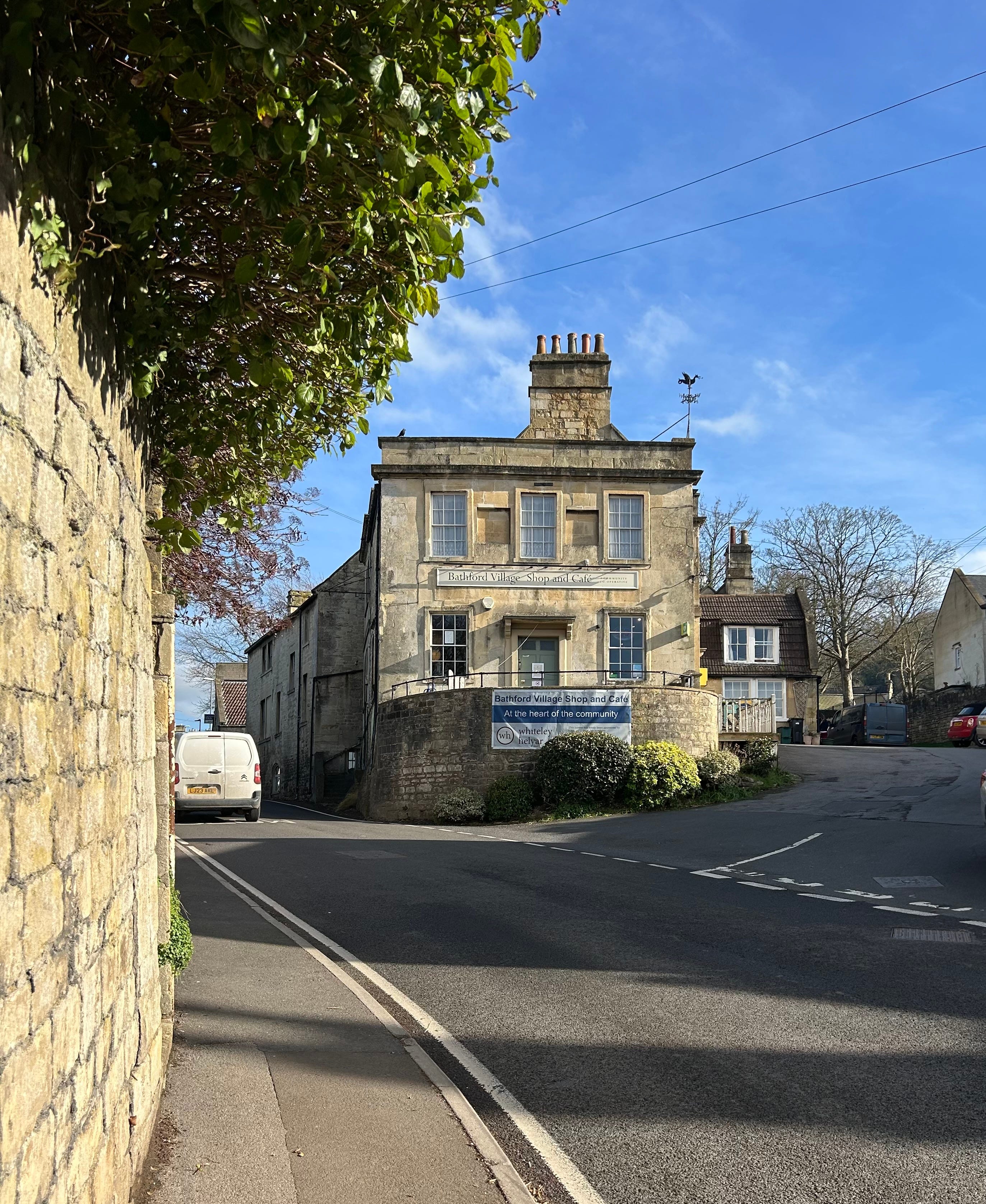
Like many English villages, Bathford has lost many of its public houses and shops. Today, it is served by one pub, the Crown Inn. The locals have formed a community co-op shop and café, housed in a former pub, The New Inn, of which the earliest mention was in 1733. The shop opened in 1994.
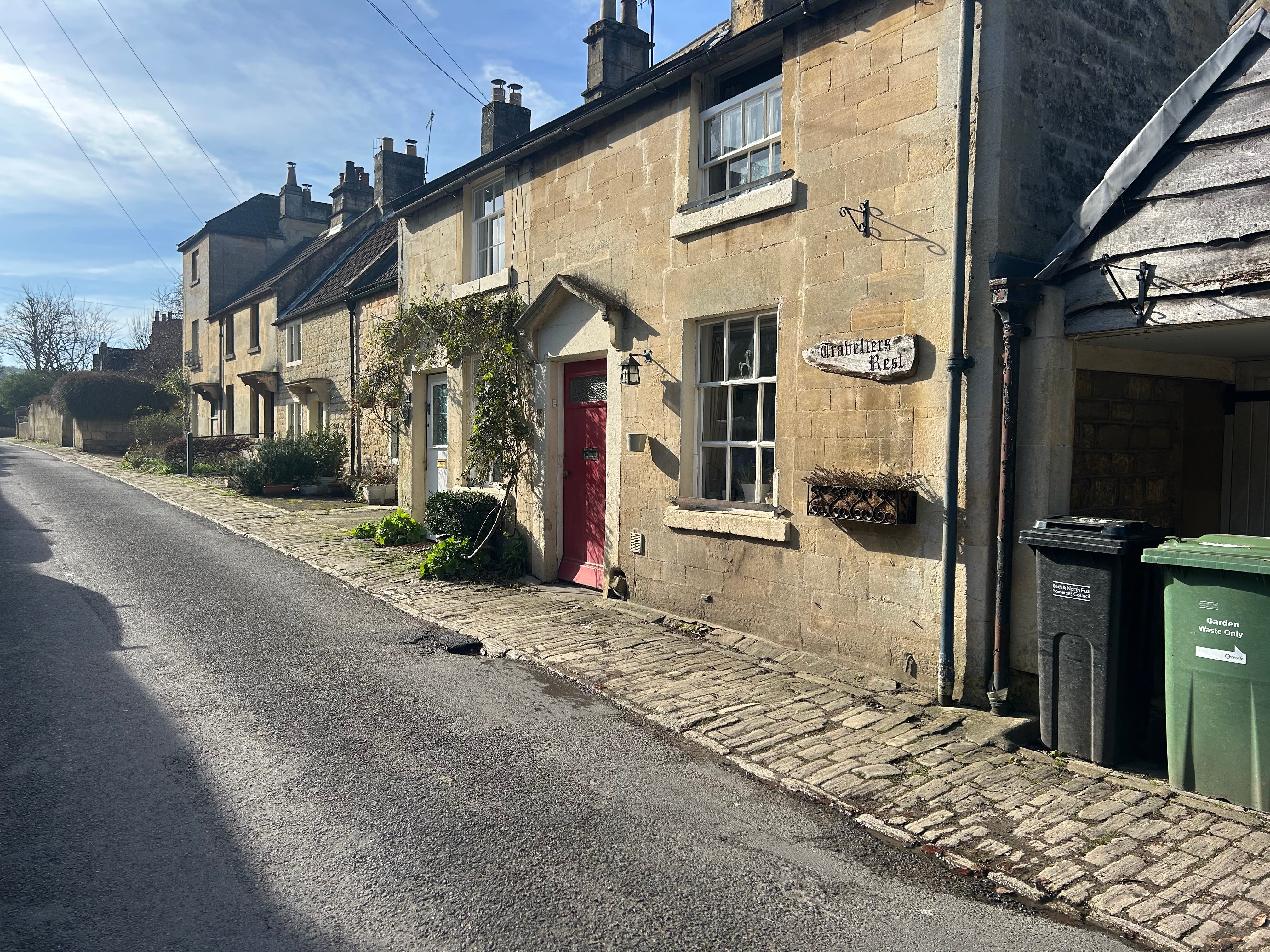
I park my car in a convenient spot along Church Street. This is a very old part of Bathford and typical of many villages that spring up around the church. Taking note of the fine old stone cottages along the road back towards the church, I will tell you about some of them later. At the start of the lane, the old school near the church can’t be seen as it’s covered in scaffolding and plastic sheets. That’s one photo I can’t take!
Bathford and the Tyndale Family
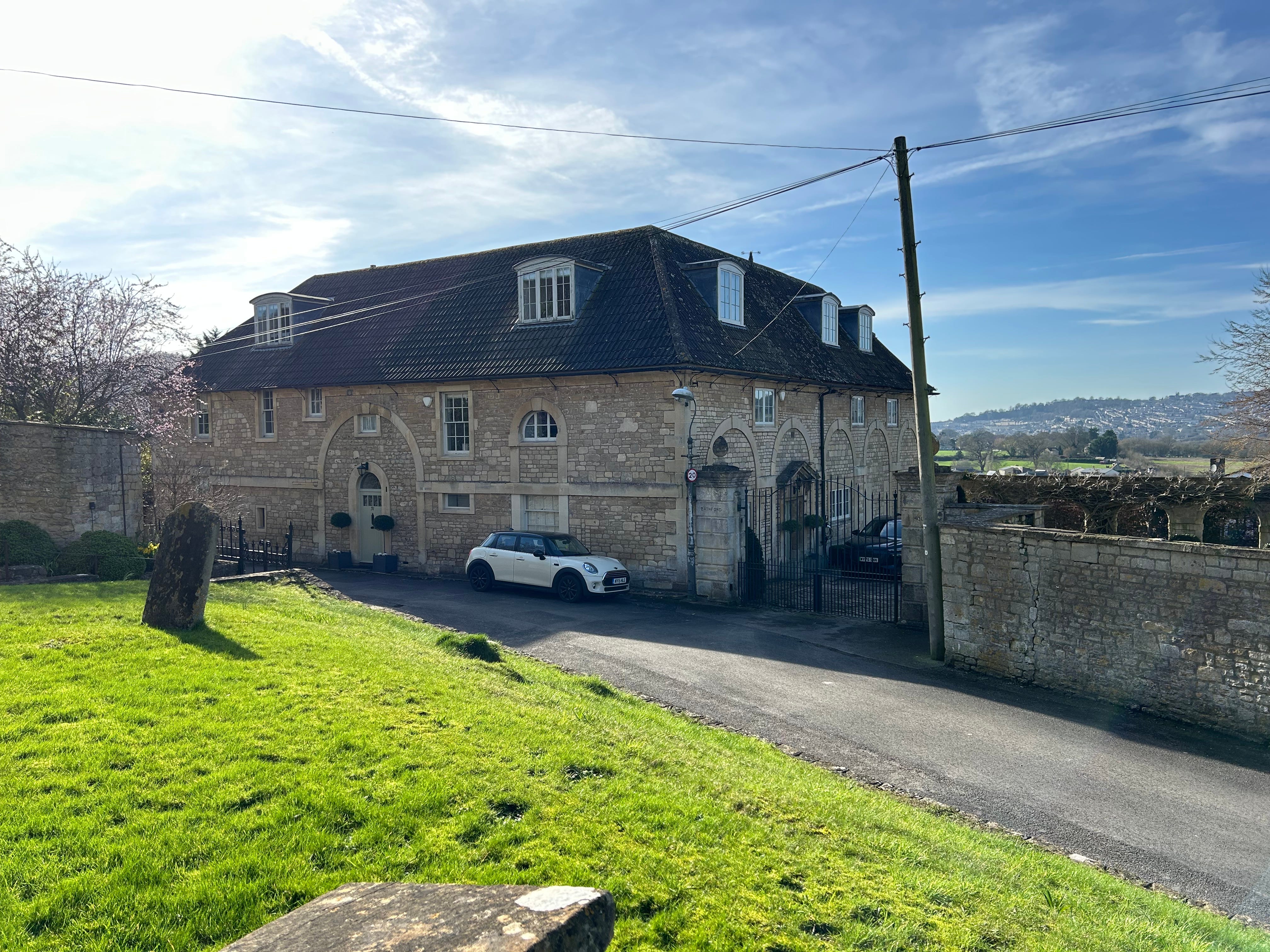
St Swithun’s Church is set on higher ground overlooking the school and the former stable block, converted to a house, Bathford House. This conversion has been renamed Bathford House. The house was destroyed by fire in 1913. The original house was a rectory occupied in 1686 by John Tyndale, a relative of the martyr William Tyndale (d. 1536), who was famous for being executed for translating the Bible into English. The Tyndale family occupied Bathford House until 1779. It was leased to them from the dean and chapter of Bristol. The Tyndale family went on to occupy other properties in Bathford for many years.
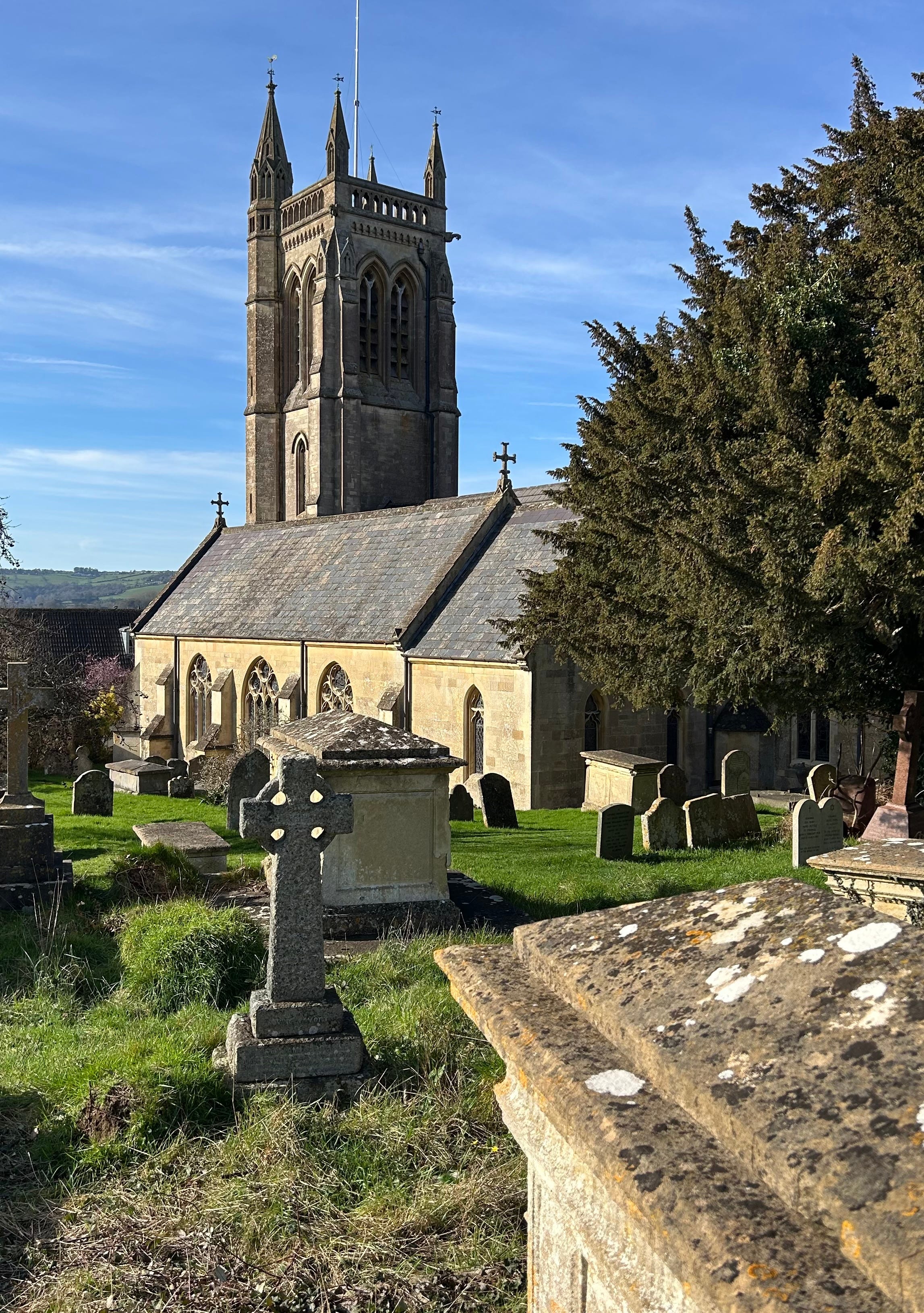
St Swithun’s Church
There is something I want to see in the churchyard at St Swithun’s. Entering through the lych gate, there is a gentleman taking advantage of the dry weather and sunshine. He’s working hard pushing the petrol-powered mower to give the grass its first cut of the year. Even with a petrol mower, it’s tough going with the graveyard being on a hillside.
With a rough idea of what I am looking for, I make my way up the hillside, heading left from the lych gate and to the east side of the church. Here I find what I am looking for. There are two tombs. They are old, and the inscriptions in the stone have worn away with countless times it has rained on them. Thankfully, in recent years, metal signs have been added to tell visitors who lie in these tombs.
In one of the tombs are the remains of Ann Nelson, the younger sister of Admiral Lord Nelson. She died on 15th November 1783 at the tender age of 23. Nelson was said to be deeply affected by her death. Next to Ann is her aunt, by marriage, Elizabeth Matcham, died April 8th April 1803, aged 74 years. See the photos below. Click on an image for the full-size view.


There are many old graves in the churchyard. With many of them grand affairs, it shows that many wealthy persons lived in Bathford during the past centuries. St Swithun’s church is old, but, like many churches, has been adapted and extended over the years, especially during the early 19th century. In 1870, the church was almost completely rebuilt, along with a new tower finished in 1880.


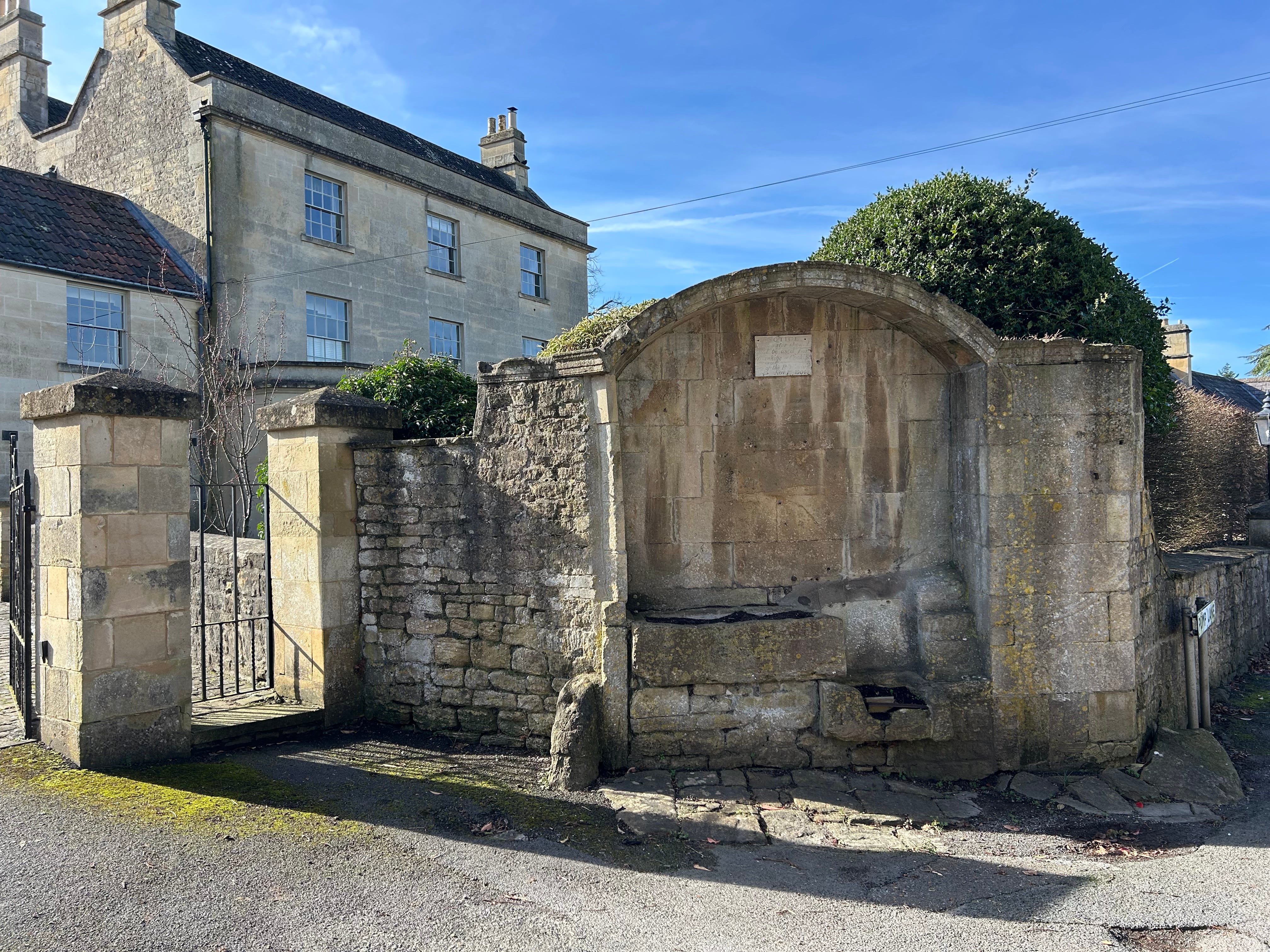
Leaving the church, I walk back towards where I parked my car outside the Bathford Parish Hall. Before I reach the car, I make a detour into Pump Lane. The name gives a clue. Attached to the wall of Sycamore House, once the home of the Dyson family and the place where the bagless vacuum cleaner was invented, there is the old village pump.
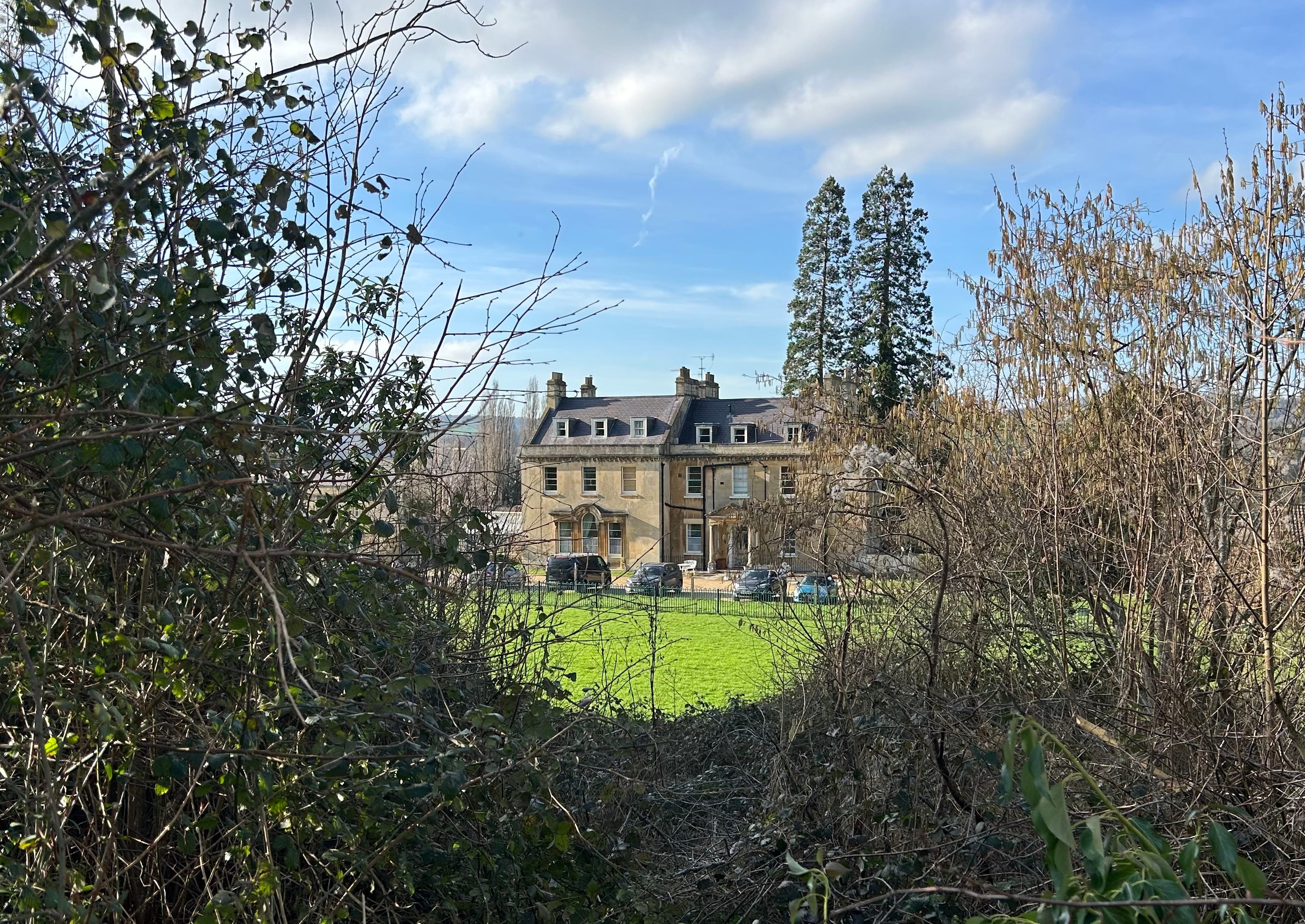
Just next to Pump Lane is Manor Drive leading to Bathford Manor House, which was built in the 1770s for the Tyndale’s after they surrendered their lease on Rectory House. Today, it’s private apartments, so I don’t walk along the driveway. Interestingly, in 1798, the house was acquired by Eleazer Pickwick, the family name that gave Charles Dickens’s inspiration for the title of his novel, Pickwick Papers, following a visit to Bath that he made. The Pickwicks were successful in business and ran a coach company.
Some of the finer houses along Church Street are difficult to photograph due to the high Bath Stone walls. One of which is Eagle House, an 18th-century mansion acquired in 1753 by James Ferry, a silk mercer. Between the years 1942-1983, the house was owned by Somerset County Council and was used for delinquent girls and then an approved home/school for younger boys.


The original post office, as has its replacement, has long gone, but there have been two over the years in Church Street, along with a provisions shop just before the end of the road near where it meets Bathford Hill.


I turn left down the steep hill to see the Blind House, a lock-up from 1837 that at one time served as a mortuary until 1924. This blind house replaced one built in 1820. It contains two cells. On the right going down the hill is the entrance to Portals, a papermill, described as ‘global experts in security papers’.


The Portals website tells us that there has been a mill on this site for centuries, and one was recorded in the Domesday Book (1086). The website tells us that:
Records show that paper was first produced on the site in 1809, and focus was mainly on the production of lightweight papers. Previously, the factory had produced corn, cloth, leather goods, flour, and even the famous Bath Oliver Biscuits.
Over the centuries, the mill was managed by a number of different owners before becoming part of the Portals Group in 1972. In 1973, the mill was converted to produce solely cylinder mould security papers, and to this day, it continues to be the only dedicated cylinder mould wood pulp security paper mill in the world.
It really is a long history of industrial occupation.
The road levels out on the valley floor, and next to Portals is the rugby club whose pitch still shows evidence of flooding. It lies next to the By Brook, which flows into the River Avon just a few yards further towards Bath. The last building at the bottom of the hill is the Crown Inn.
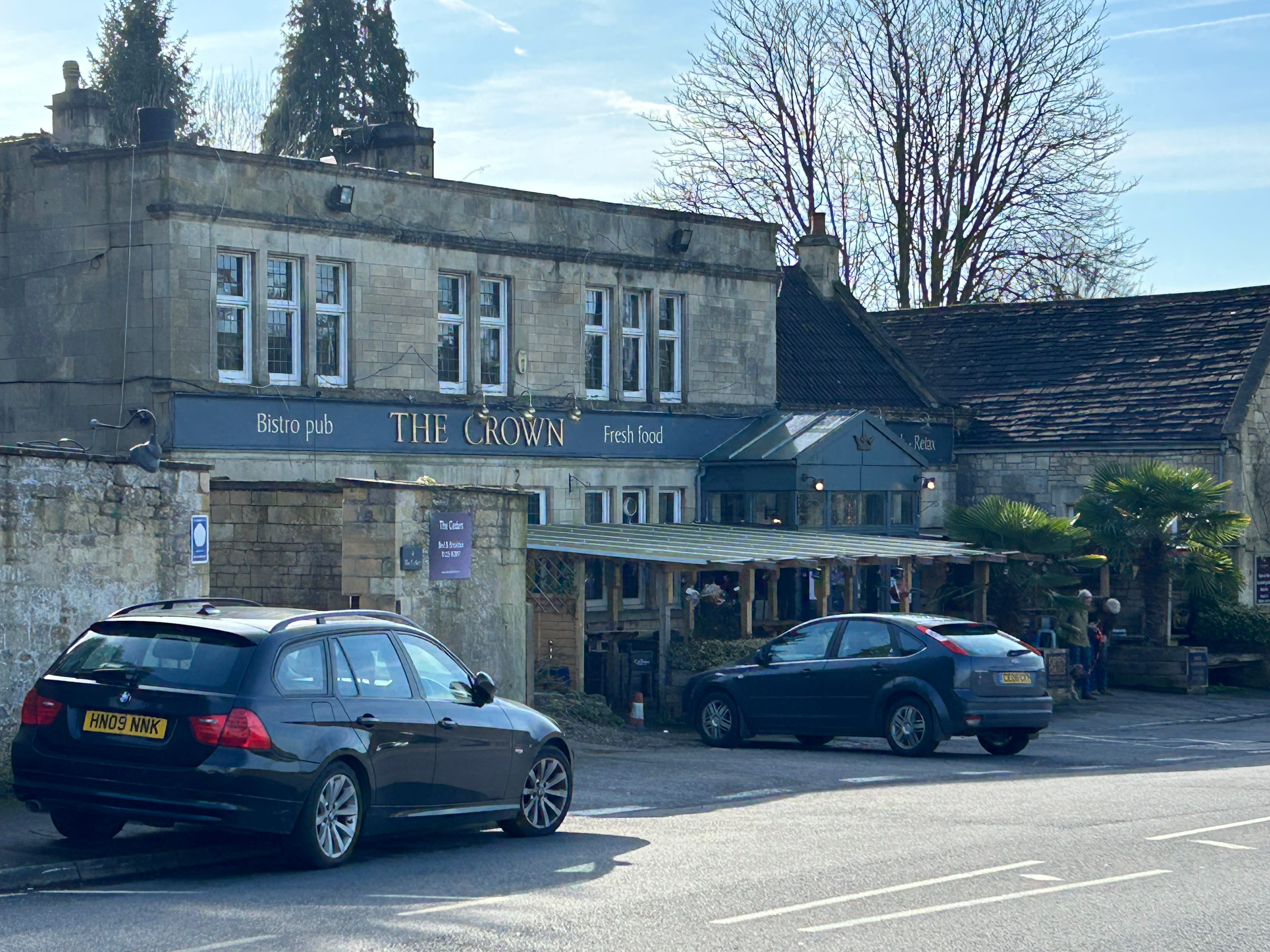
This pub was a traditional seventeenth-century building which was refronted in the early part of the twentieth century. When the road from Bath to London was turnpiked (tolled) in the early 1700s, the meetings of the Turnpike Trust were held here. I hope the trust members didn’t allow the beer to cloud their judgement!
Before I head back up the hill, I take time to see the old bridge over which the main road crosses and goes unnoticed by thousands of drivers. The bridge crosses the By Brook and was built in 1665 and can still cope with today’s heavy traffic. The ford was beside it and was still used up to the mid-1900s. Just beyond it is the railway bridge, one of Brunel’s for the Great Western Railway as it runs from Bristol to London via Bath.


It’s now time to head back up Bathford Hill to see the community shop, but before I pass a cottage clearly proud of its past with a stone sign showing that it was once a bakery.


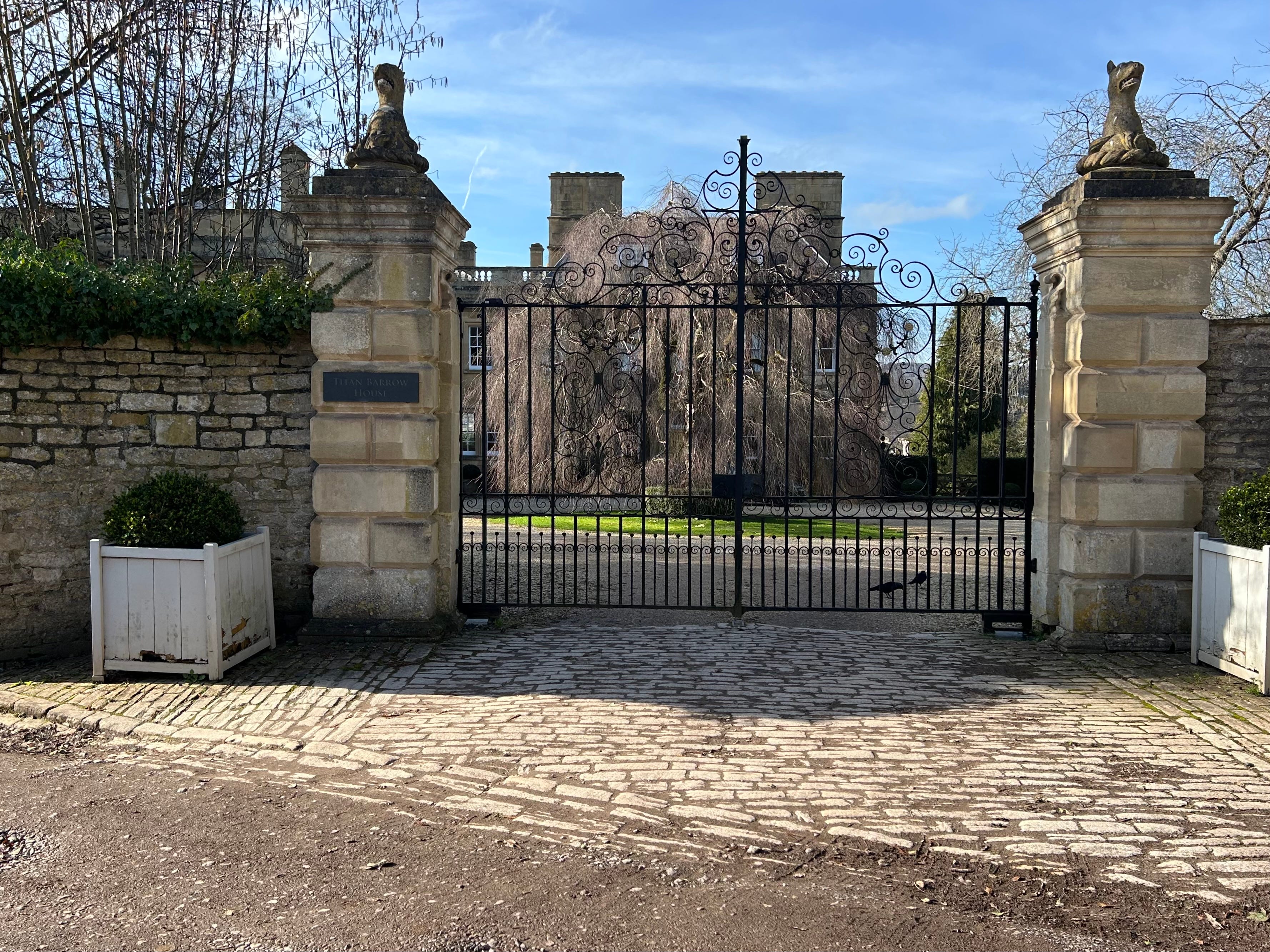
I walk into the drive opposite Church Street to see a house, Titan Barrow built in 1748. The house has been altered over the following centuries but still retains much of its original grandeur. The house provides beautiful views over the valley in which the River Avon flows towards Bath. In 1953, it was acquired by the Whitehaven Trust and is a Christian Science House.
The Bathford community shop is now clearly in view. The shop is a local initiative and formed as a cooperative for the benefit of the village. It shows what can be done when people come together for the benefit of their community.
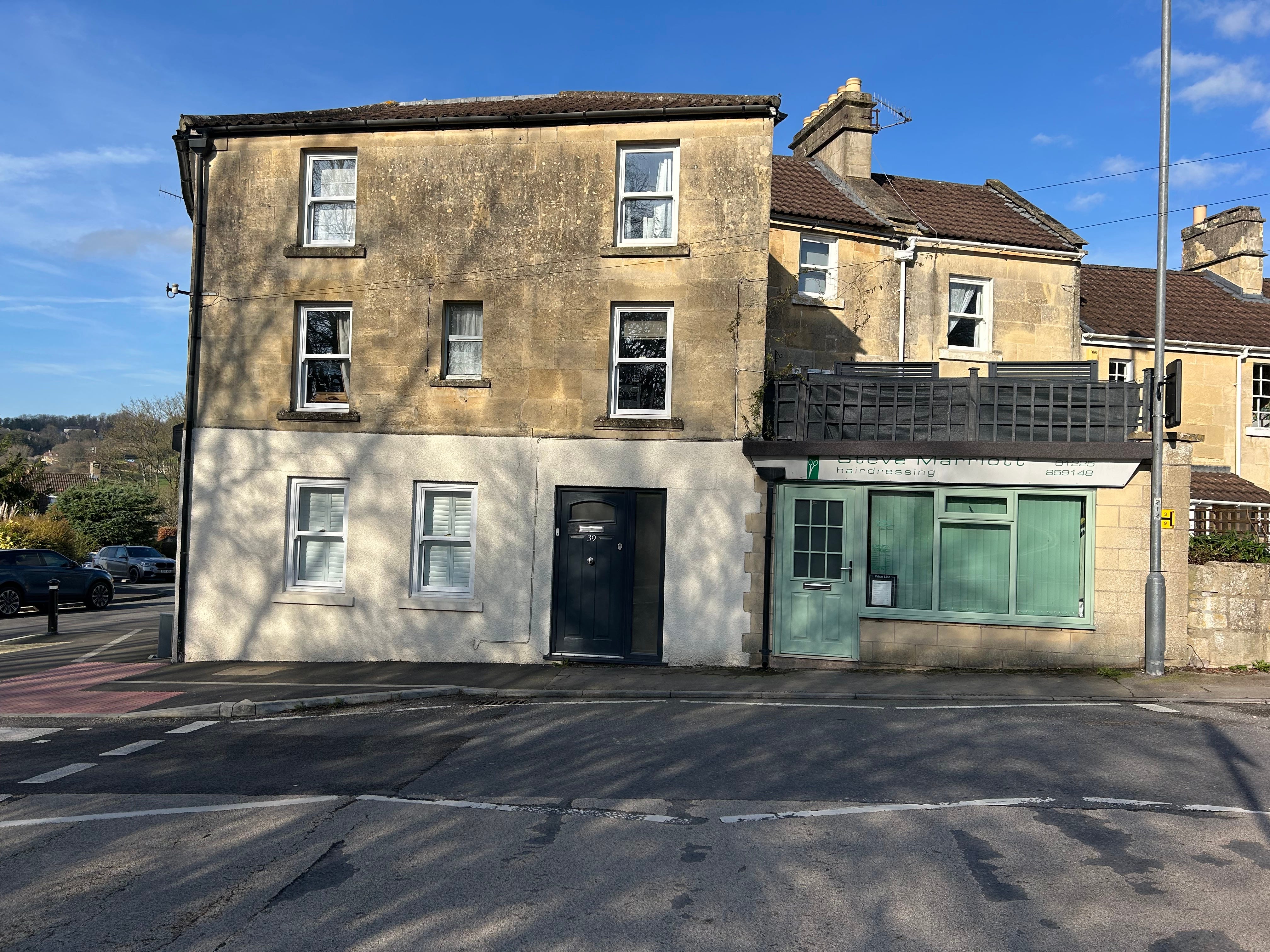
Other shops too were on the junction with Ashley Road, leading off to the left, further past the community shop. I decide to turn into Dovers Park, on my right, a more recent housing development, which is just off the start of the High Street.
The High Street is a later edition to the village, having been created in 1759. Taking this route should provide me with an opportunity to take a photograph of Tyndale’s Bathford Manor House. Gratefully, a gap in the hedgerow allows me to take my photo.
There is so much more to tell about Bathford and every time I do research, it can open up another opportunity for a story. I decide it’s time to head back to my car and think about what to write, and also gives me some ideas for future stories. I am writing this a few days later, reflecting on what I have seen and discovered. It’s amazing how much history this small village contains.
Thank you for reading this story. If you haven’t subscribed yet, please use the subscribe button below. It’s always free to read all of my stories, with a paid option for anyone who wishes to help support what I do. Or you can use this Buy Me a Coffee link. Please feel free to leave a comment.

I loved this article! I got married in st Swithin’s church, so lovely on the inside
I really enjoyed this. I’m always drawn to writing that begins with a place and then lets the historical details reveal themselves. Villages often look quiet on the surface, but once you start noticing, they can become wonderfully layered. Thank you for posting. I look forward to reading more.