

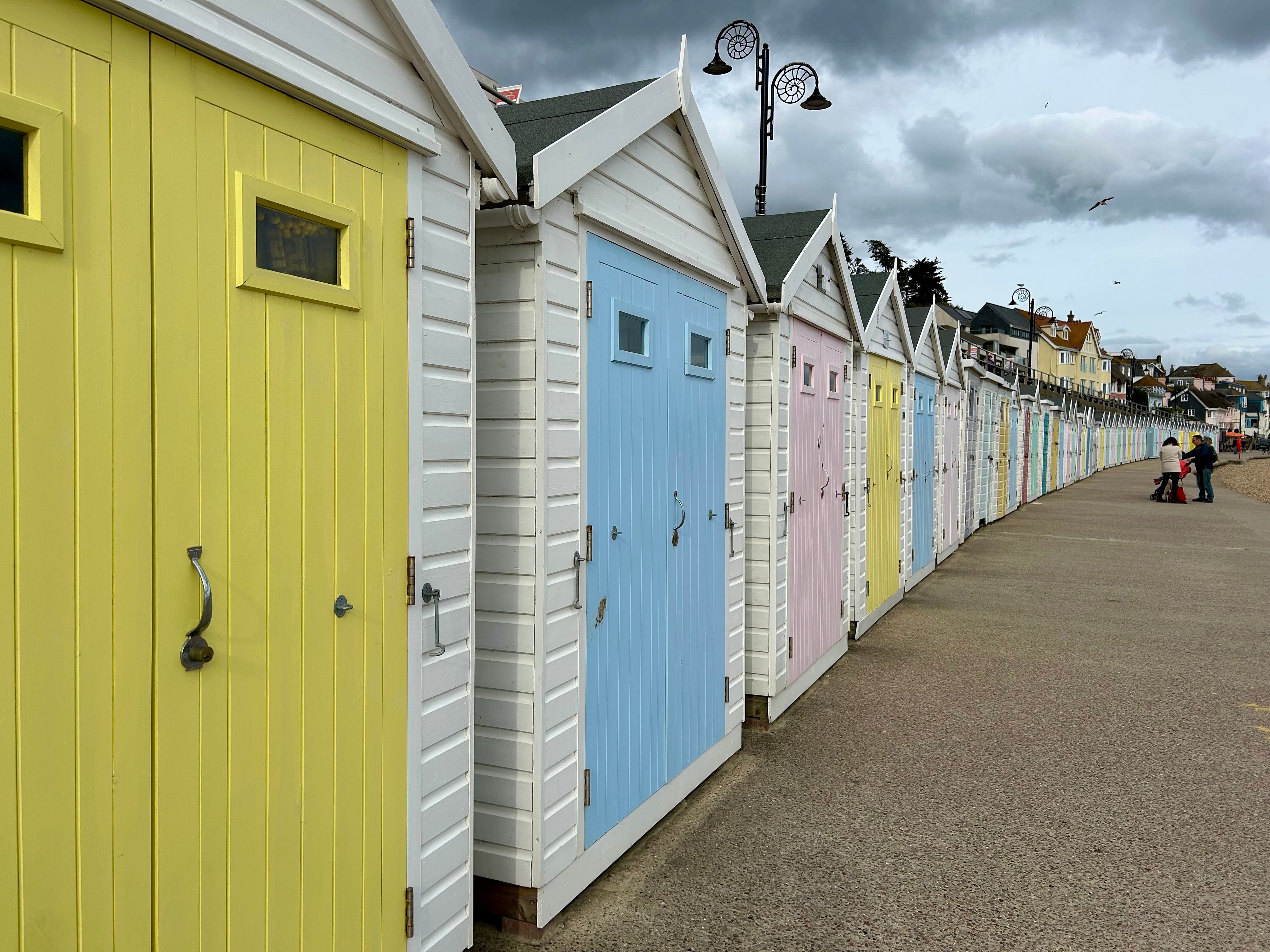
Whilst not entirely unique to the UK, the beach hut is very much part of the British coastal scene. Rows of huts, often brightly coloured, sit close to the rolling waves of the sea. In many places, the beach hut is only a few steps from the sea when the tide is in.
The History of the Beach Hut
How did the humble beach hut come to be? After all, these are only wooden sheds in a desirable location.
It all started with the bathing machines—a small wooden shed on wheels. Originating in the 1730s, the bathing machine was a place where bathers could change into their swimming costumes. The machines were wheeled up to the sea to allow the bathers to exit for their swim and enter from the sea to dry off and change back into their daily clothes.
The earliest use of the bathing machine was likely used by persons who would swim nude. The machine would allow them to get further into the sea and then quickly hide their body under the water, whilst the bathing machine hid them from the view of those on the beach. Beaches were segregated until 1901, and the decline of the bathing machine began.
With the coming of the Edwardian era, attitudes had changed, and many would now change on the beach under a coat or similar to protect their modesty. Many people today use a towel. The bathing machines fell out of use. Seizing the opportunity to recycle the machines, some would remove the hut from the frame and make use of it, creating what we know today as a beach hut. Some machines hung on as stationary changing rooms, but by the 1920s, they were almost extinct.
How many beach huts are there in Britain?
Today in Britain, there are around 20,000 beach huts along the coastline. They have become very popular for people to rent or buy. As a result, the cost of beach huts can often be more than the cost of a house in many areas. The record price for a beach hut was in Mudeford Sandbank, Christchurch, Dorset, reaching an eye-watering £500,000 — yes, you read that right, half a million pounds for a shed! The average cost in 2025 for a beach hut was £39,382. The lowest prices start from £5,000, but many are in the £75,000 - £100,000 price range. See the link below for a website selling and renting beach huts1.
To rent a beach hut, you can expect to pay from £30 to over £100 per day. They are in demand, so be prepared to book early. Some local councils own beach huts, and you would rent directly from them. Private owners can also rent out their huts when they are not personally using them.
Owners of beach huts have to pay business rates as the huts are not treated as domestic dwellings. Most do not have an electricity or water supply, and overnight stays are generally not permitted. This can add up to a few hundred pounds per year to over one thousand pounds. It gets all very expensive for the pleasure of owning a wooden shed! Having said that, there is no shortage of would-be beach hut owners, and the popularity seems as high as ever, especially since the Covid lockdown era.
I must admit that when I walk past a beach hut I often have a tinge of envy of those who are able to sit inside their shed with the doors wide open and enjoy the sea view whilst enjoying a cup of tea. There’s often room to have deck chairs in front of a beach hut and read a book whilst doing the odd bit of people-watching. The beach hut provides a place of respite from the rain, or on that rarest of British occasions, a chance to take cover from the sun.
Do you own a beach hut or would you like to? Have you rented one? Please let me know in the comments.
Thank you for reading this story. If you haven’t subscribed yet, please use the subscribe button below. It’s always free to read all of my stories, with a paid option for anyone who wishes to help support what I do. Or you can use this Buy Me a Coffee link. Please feel free to leave a comment.
I find the beach huts intriguing and have always wondered what the story is with them. Thanks for shedding a little light on it. I think it's absolutely ridiculous that anyone would pay those prices for a beach hut.
This brought back memories. In my early childhood ... late 1950's, early 1960's we used what my parents referred to as a chalet ... but the same thing as the huts you are referring to. It was on the seafront at Mablethorpe in Lincolnshire where in my early years we always had our holidays. I don't remember a lot about it. It was very basic.I have a vague memory that Mum and Dad could make a cup of tea in it... perhaps not, maybe they took a thermos? It had some deckchairs I think. Also a long wooden seat that you could lift the lid up to reveal a storage place. That's where we kept the buckets and spades. I remember this well because on one occasion my brother lifted the lid just as I sat down and I fell in it! We didn't own it so I assume Mum and Dad rented it for the week long holiday. Anyway, interesting to hear about the history, thank you.