
Maud Heath’s Causeway
For many years I have known the story of Maud Heath’s Causeway, but have never been along it or written about it. Today, it’s time to change that.
With the December sun hanging low in the sky, I knew photography might be difficult. It is, though, better than the rain and dense cloud we have been experiencing, and I need to visit this historical Wiltshire causeway.
Our story of Maud Heath starts in the year 1474. Maud, a widow, gifted several properties in the Wiltshire town of Chippenham into a trust fund. Income from the fund was to be used to create a causeway and maintain it.
The causeway was to run from the village of Bremhill, commencing from the top of Wick Hill, and ends at Chippenham Clift.
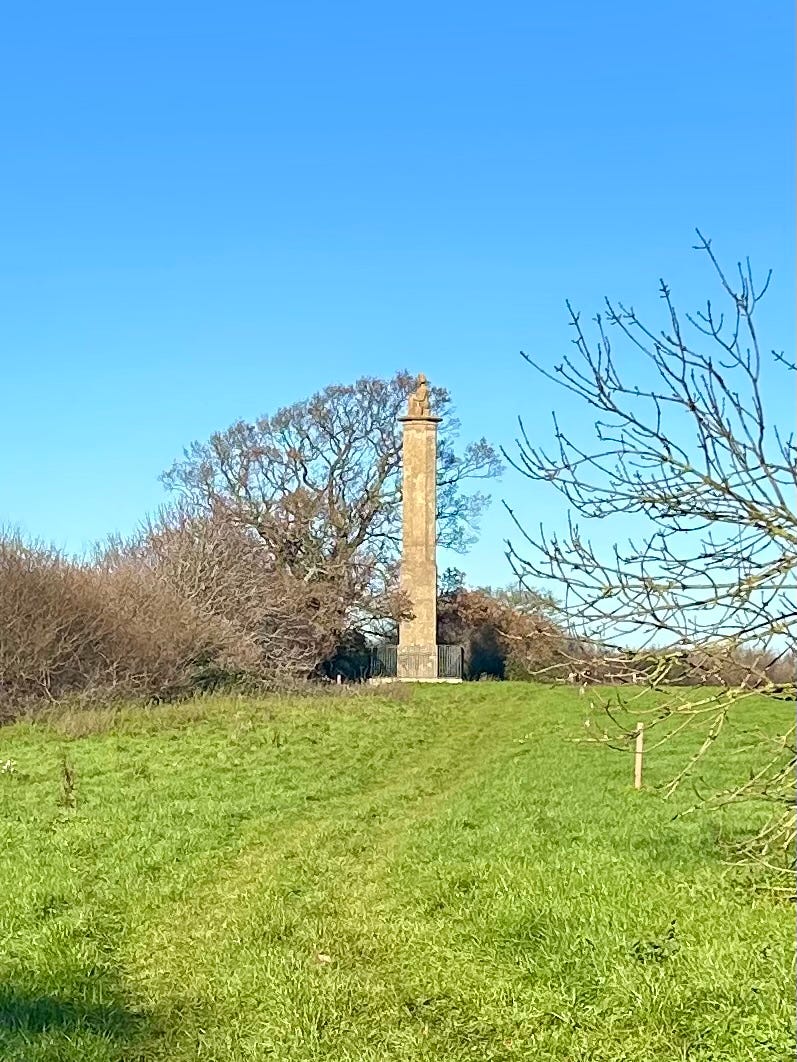
At the top of the hill stands a statue of Maud Heath on the top of a high column. (Opening photo) Maud is looking over the direction of her causeway. It was erected in 1883 by Lord Lansdowne. Upon it is inscribed a poem by William Bowles, who was the vicar of Bremhill at the time of its construction. The poem reads:
Thou who dost pause on this aerial height
Where Maud Heath’s Pathway winds in shade and light
Christian wayfarer in a world of strife
Be still and consider the Path of Life.
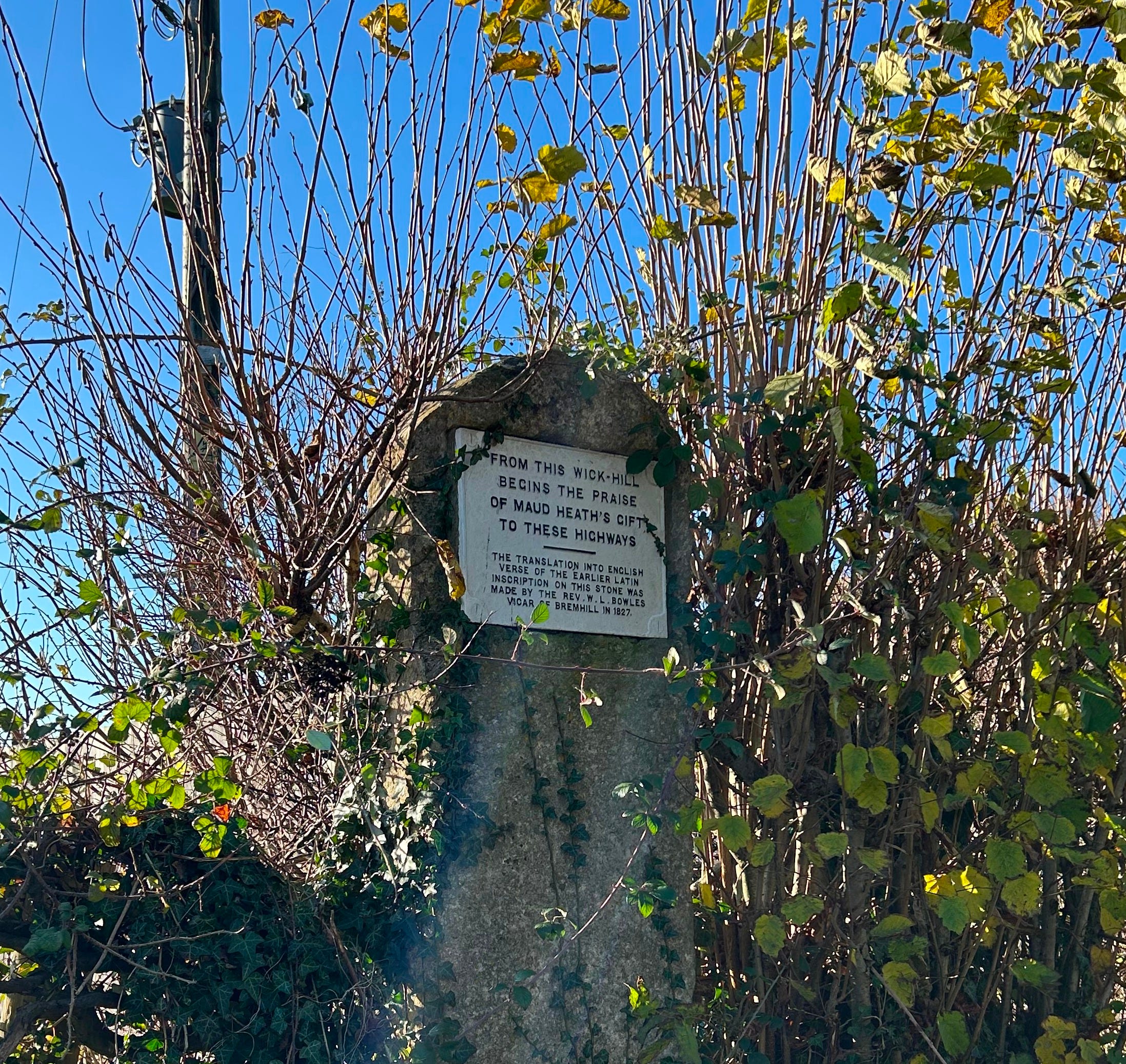
The total length of Maud Heath’s causeway is 4½ miles. It descends through East Tytherton to the river meadows at Kellaways, then passes through Langley Burrell. A stone marker can be found at each end of the causeway; the one in Chippenham is close to St. Paul’s Church near the roundabout.
Who was Maud Heath?
Who was Maud Heath? Oral tradition tells us that she was a wealthy market trader who travelled to Chippenham to sell eggs that she bought from local farmers. The market was most likely where the very old Yelde Hall is, and not far from the properties she and her husband, John, owned.
Maud Heath - the mystery solved
In July 2024, the BBC reported that the true story of Maud Heath had been discovered by Louise Ryland-Epton and John Chandler, from the University of the West of England, who worked alongside The Victoria County History and Chippenham Museum, to find that Ms Heath was part of a wealthy dynasty of Bristol shipping merchants.
Maud— or Mathilda Hethe, as she called herself— endowed property in Chippenham to the care of trustees, prominent among whom was a Bristol merchant and the city’s MP, John Bagot. The researchers concluded that Maud was the elderly aunt of Mr Bagot. The story on the BBC website concluded:
“The causeway, which Ms Heath gifted the town, runs right past the site of the house by the river at Kellaways and would have enabled travellers to leave the Bristol Road and cross the Avon further upstream, then climb up to Bremhill to rejoin the London Road into Calne.
It was the way that Mr Bagot himself went when he had to attend Parliament – in one direction – or to see to his Bristol affairs – in the other.”
Maud Heath’s Trust
The original trustee documents and deed box are stored at the Wiltshire and Swindon History Centre in Chippenham. Unfortunately, there is no surviving will or parish records to verify the details of the inheritance of the properties from her husband, John.
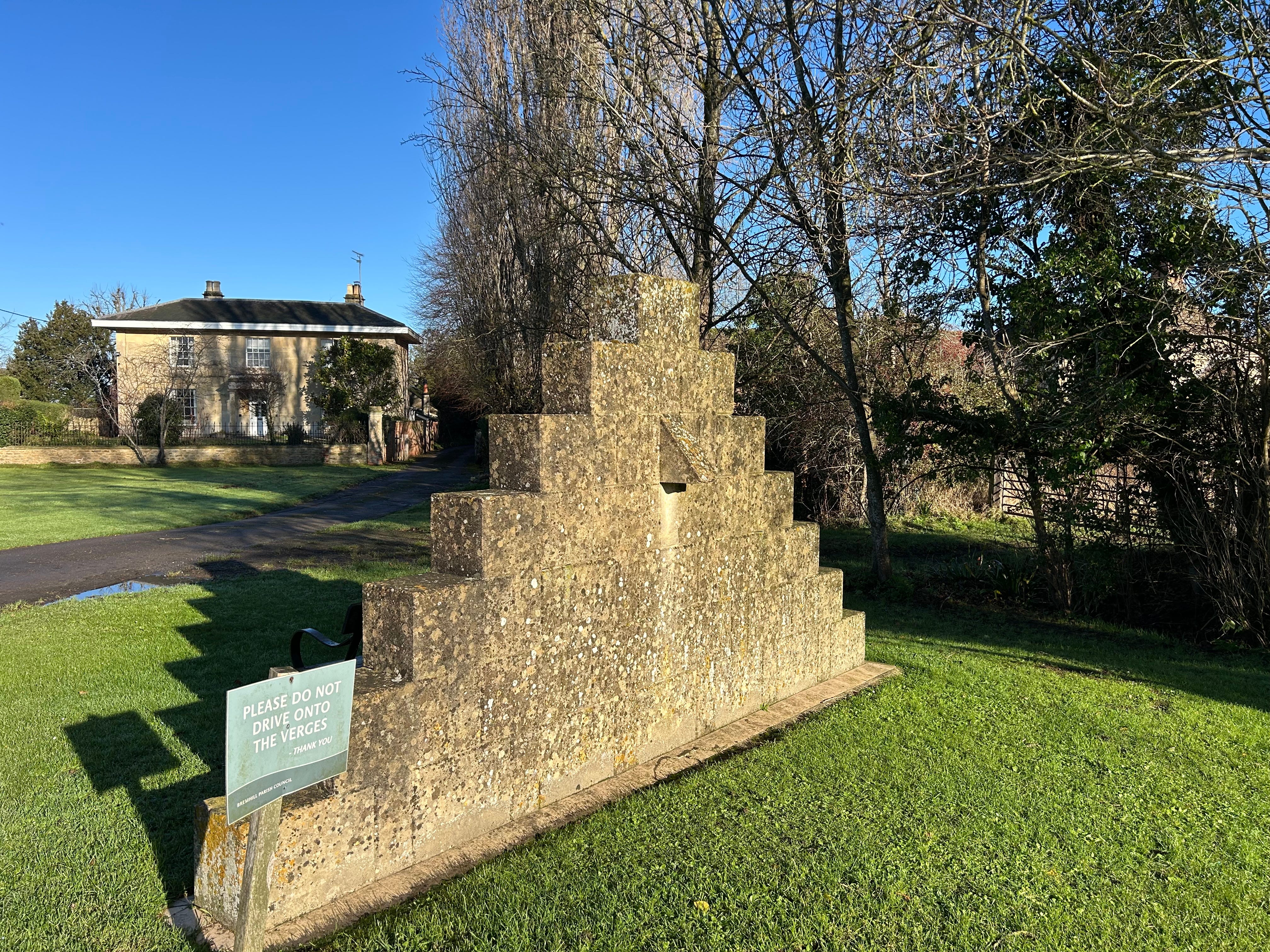
I start from the marker stone at Bremhill, close to the town of Calne, and head towards the next village. I soon reach East Tytherton, and I will write more about this village in my next article, and explain how such a small rural place came to have a Moravian Church. Many of the properties, including the Moravian Church, are clustered around a small village green, and it’s here we find a sundial created in 1974 to mark 500 years of Maud Heath’s legacy.
What’s at Kellaways?
Leaving the village behind, I head west along the causeway and reach St. Giles Church on my left-hand side, close to the side of the road. This church was completed in 1805, but not consecrated until 1808. It replaced a church on the opposite side of the road and next to Kellaways Mill, which was on the banks of the River Avon. The church was said to be often infested with vermin and “dangerous to the health of parishioners to attend.” In both 1754 and 1786, it was reported to be in such a dilapidated state that it was recorded as having been destroyed. In 1803, William Boucher added more detail when writing, “Kellaways Church in its present state is more like an hovel than anything else”.


The old church was demolished, and some of the stone was used to create the wall around St. Giles Church that runs around the churchyard.
The Maud Heath Causeway Kellaways Arches
Just beyond the church, we need to cross the River Avon. The original crossing has been replaced in 1812 with a raised footpath comprising 64 arches to keep pedestrians’ feet dry when the river bursts its banks. The modern road has its own bridge, but the road is much lower than the pedestrian causeway, making crossing by foot more likely than by car during flooding — thank you, Maud Heath!
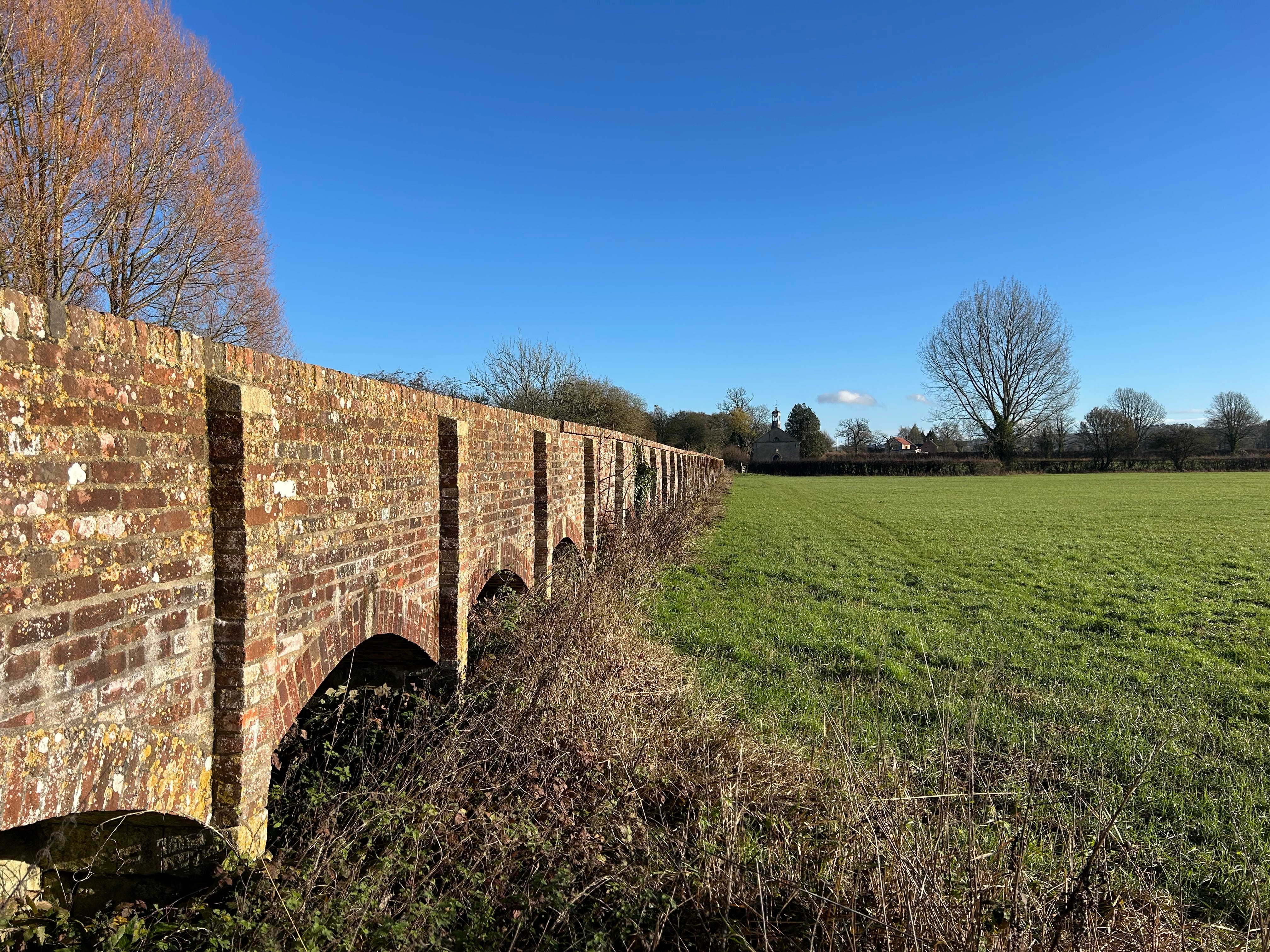


The original pathway would have been raised up on stones and crossed on wooden footboards. The stone arches and path on top are a much better option, and the longevity has proven the investment to be worthwhile.
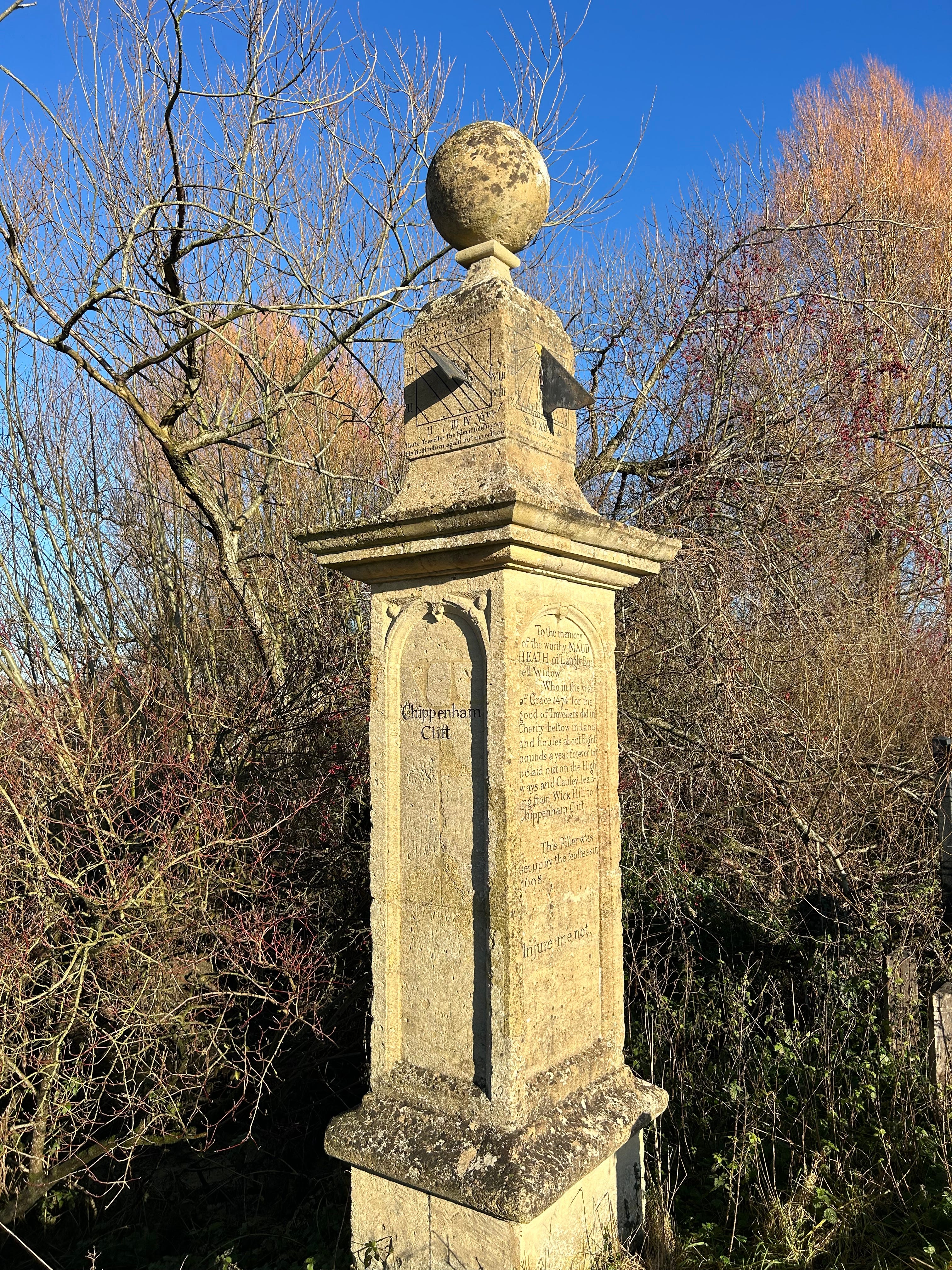
In 1698, the first known public declaration made by trustees is found on a three-metre-high memorial pillar and sundial by Kellaways Bridge. Here’s what it says:
‘To the memory of the worthy MAUD HEATH of Langley Burrell, Widow, who in the year of Grace 1474, for the good of Travellers, did in Charity bestow in land and houses about Eight Pounds a year forever to be laid out on the Highways and Causey leading from Wick Hill to Chippenham Clift. This Piller was set up by the feoffees in 1698. Injure me not’.
The word ‘Causey’, now causeway, possibly originated from the French word, chausée, which is a raised path. Kellaways Arches was built for the princely sum of £602.


The causeway today, apart from the Kellaways Arches, is all part of the road system as a normal pedestrian footpath running alongside the road for the whole length of the original causeway. Footpaths alongside rural roads outside of a village are a rarity in Wiltshire, so having one that allows pedestrians to walk 4½ miles in relative safety is to be welcomed.
Maud Heath’s Causeway is reported to be one of the oldest running trusts in the world, and it’s also one of the longest privately owned paths maintained by any trust in England.
Travelling on, I reach Langley Burrell, another small village. This one does have a pub, The Langley Tap, and a village hall. If you were a passenger in a car, you wouldn’t have to close your eyes for long to miss seeing this village. I now reach a T-junction and head left onto the B4069 and in seconds reach the ever-expanding town of Chippenham. Going straight on at a roundabout keeps me on what was Maud Heath’s Causeway, now Pew Hill and Langley Road.
I come to the end of the route by the roundabout close to St. Paul’s Church. A parking space was found in the nearby Hathaway Retail Park’s car park, and now I can cross the road for the last photos required.
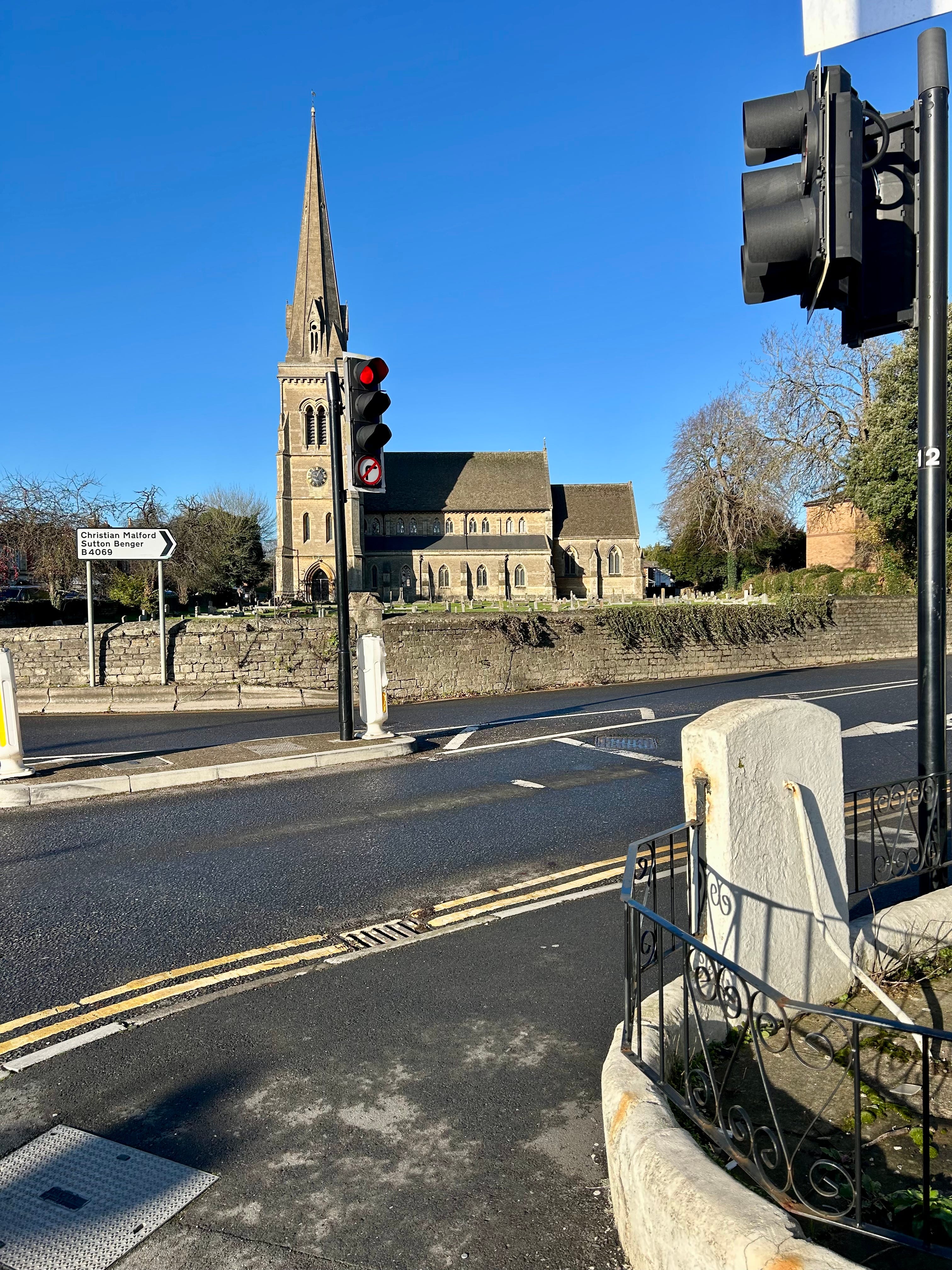
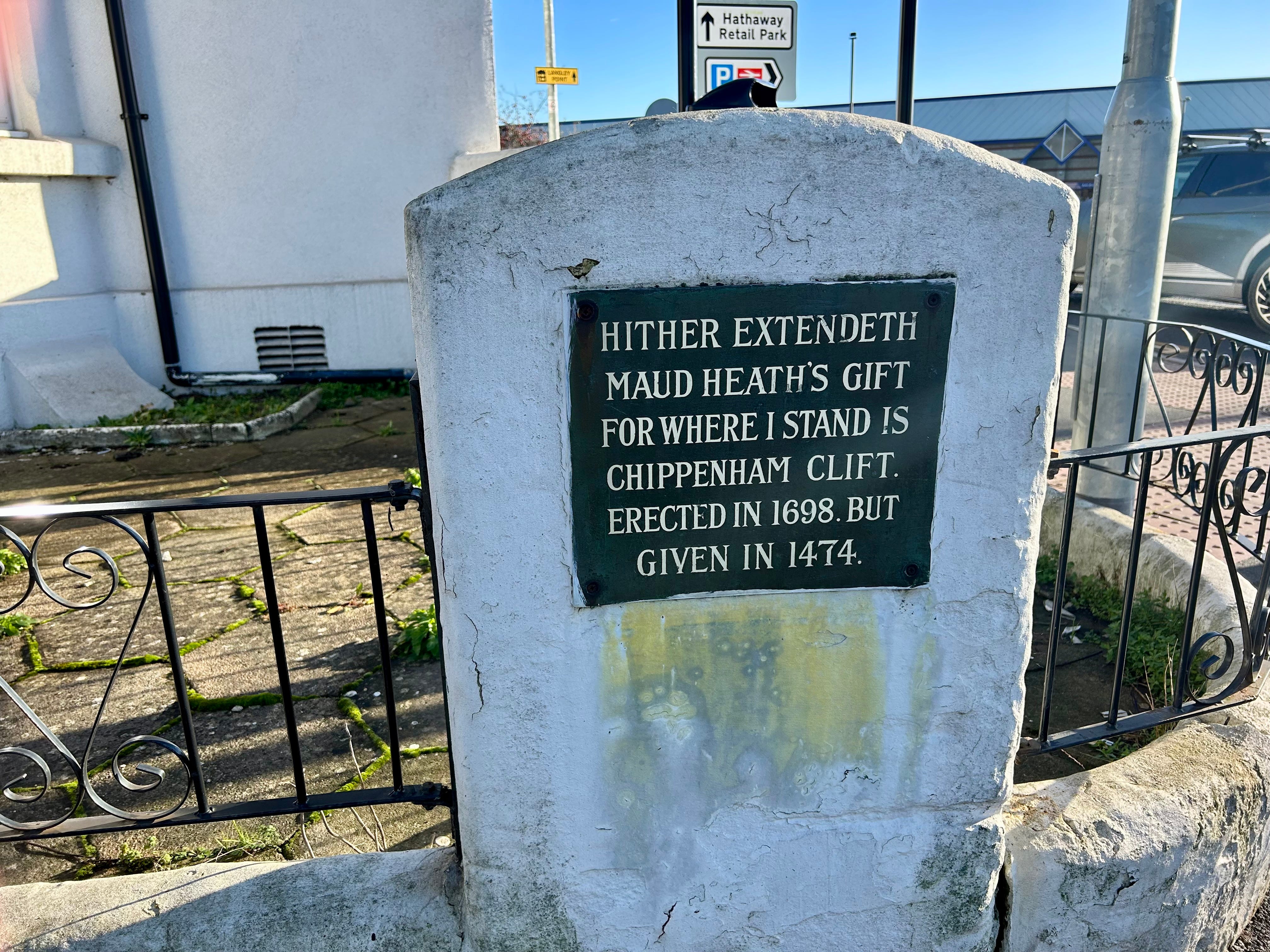
The end of Maud Heath’s Causeway is marked with a plaque on a white marker stone. In 1893, the original stone vanished during road improvements. The present marker was erected the following year, bearing the original inscription on a metal plate. Surprisingly, in 1968, the original stone was found during excavations made to construct the new Barclays Bank building in the Market Place. It is now displayed in the Chippenham Museum.
Maud Heath has certainly left a legacy, and her story is told to this very day. I hope you have found it interesting, and if you know of any other such legacies, please let me know in the comments or get in touch using the button below.
In my next story, I will tell you more about the village of East Tytherton, as promised. If you’re not a subscriber yet, use the link below. It will always be FREE to read all my stories, but if you would like to support what I do more, you are welcome to become a paid subscriber. More details when you subscribe or click Upgrade if you are already a subscriber.