
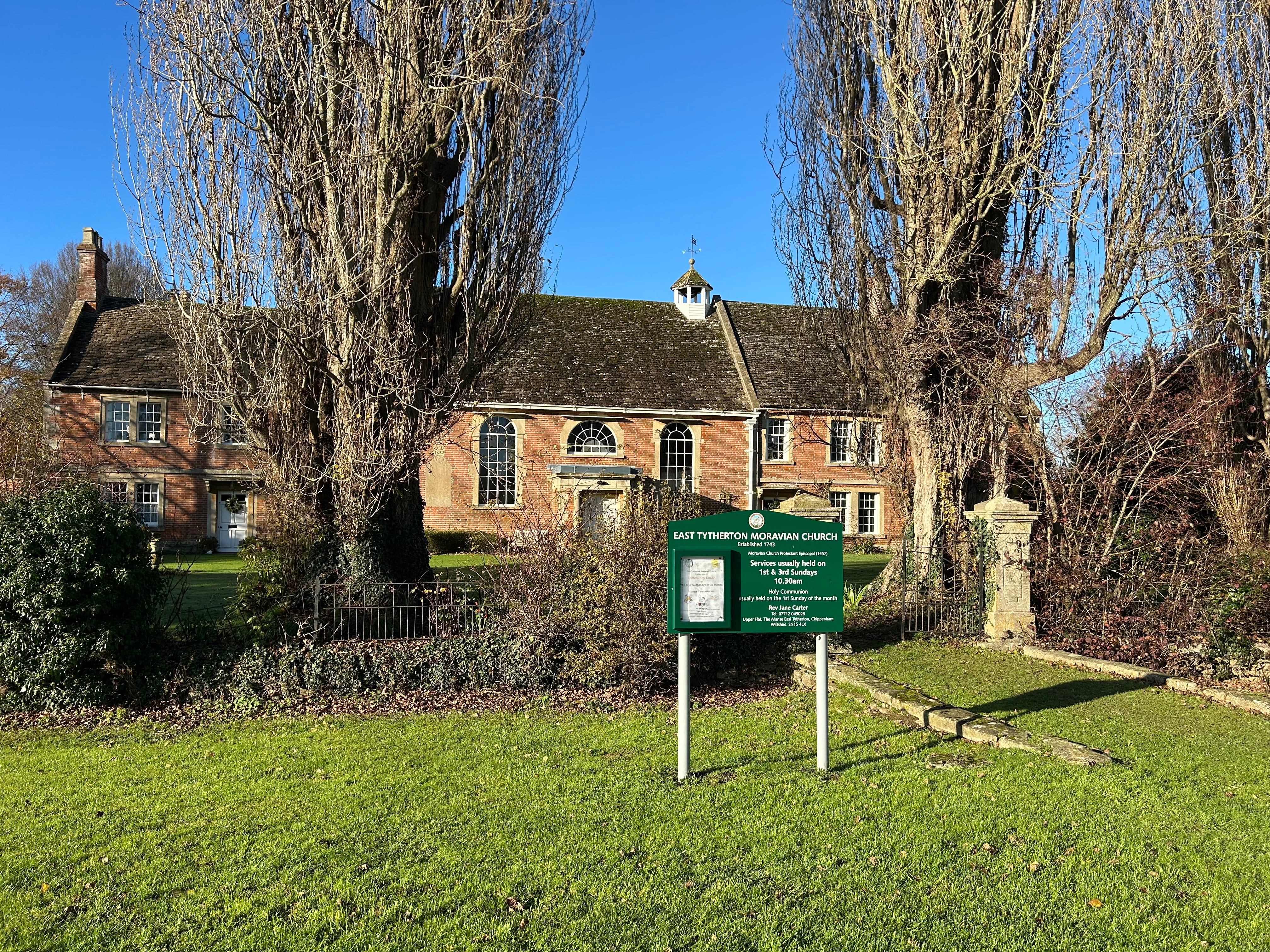
In last week’s story, Travelling on Maud Heath’s Causeway, I told a remarkable tale of one of the longest-lasting trust legacies in the world. My journey took me through the tiny village of East Tytherton, and with such a small population raises the question: Why is there a Moravian Church in East Tytherton?
We need to go back to the eighteenth century to discover the answer.
John Cennick
Our story starts with a man named John Cennick, born on 12th December 1718. He was born in Reading (pronounced Redding). His parents were Anglican, and John was raised in the Church of England. Moravian Bishop E. R. Hasse told the story that Cennick’s family had originated from Bohemia, and left as did many Moravians because of persecution in the early seventeenth century. In England, his family became Quakers, influenced by George Fox, a 17th-century English Dissenter.
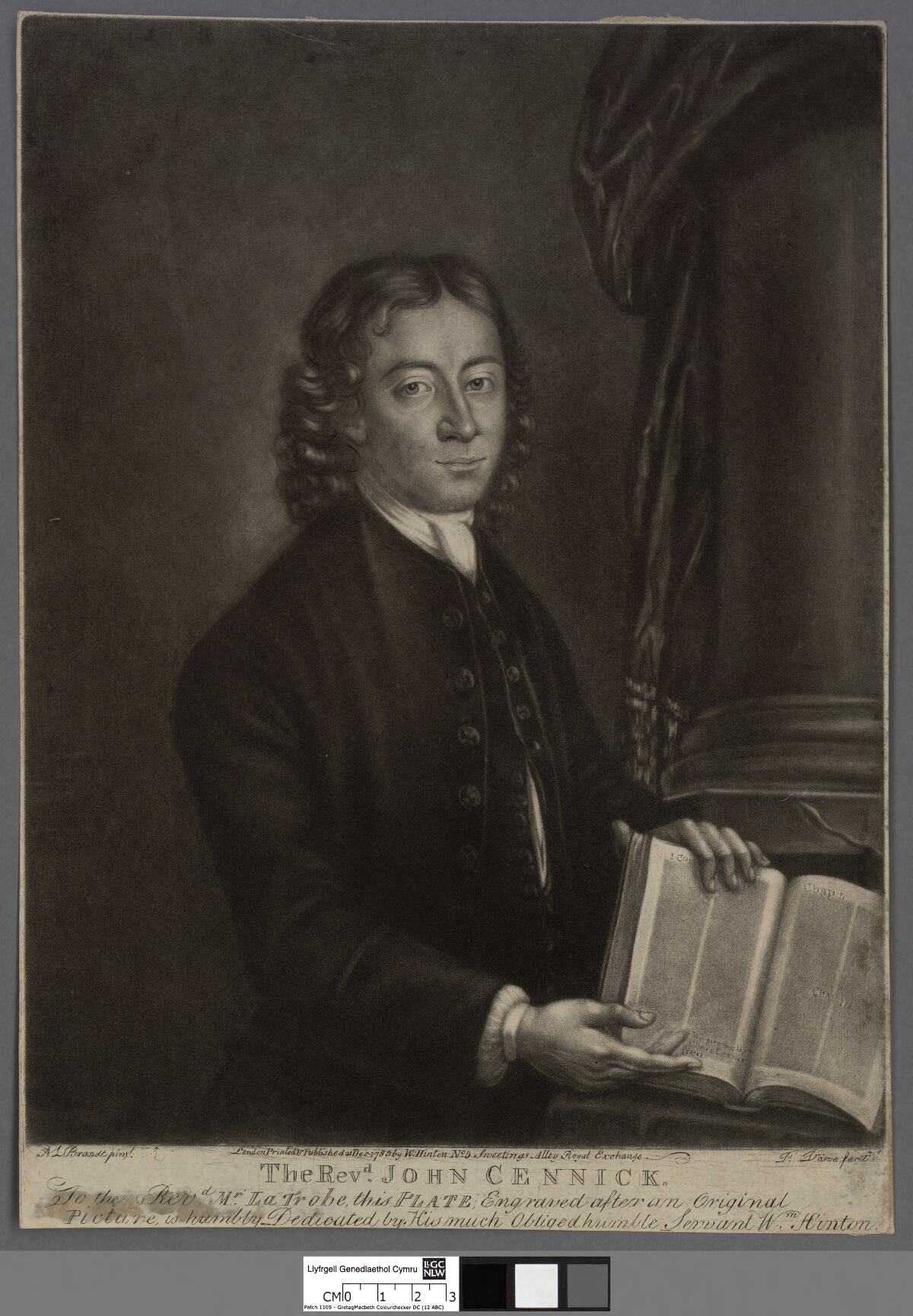
His early life could be said to be problematic. At age 13, he travelled to London to seek an apprenticeship. John made eight trips to London and failed to find an apprenticeship. He found this difficult and became despondent, turning to gambling, lying, and petty theft. Concerning this period in his life, Cennick wrote, “I had forgot Jesus and everlasting ages:... loving ungodliness more than goodness and to talk of lies more than righteousness”.
It was in 1735 that John Cennick saw the need to change his lifestyle. Whilst walking quickly through Cheapside in London, he felt the weight of the sin he was committing. Apparently, these feelings were strengthened by his association with friends who were pious. John, at some point, aged 17, walked into a church.
In the church, he heard the words of Psalm 34:19 and 22b:
vs19 Great are the troubles of the righteous, but the Lord delivereth him out of them all!
vs 22b And he that putteth his trust in God shall not be desolate.” He later said that he heard the voice of Christ speaking to him.
Cennick cleaned up his life and, for a time, worked as a surveyor back in his hometown, Reading. During this time, he began to read the words of George Whitefield, one of the early founders of Methodism. Through a friend, he went on to meet Whitefield and the brothers, John and Charles Wesley, the very well-known founders of the Methodist movement. Cennick joined the Methodist movement and, in 1740, he became a teacher at Kingswood.
Soon, he found himself disagreeing with some of the doctrine of Wesley and allied himself with the Calvanistic Methodists, an offshoot of the Methodists, which came to be based in Wales. In 1745, he joined the Moravians and made the journey to Germany to study their teachings.
John chose East Tytherton as his home and had bought a house here in 1742. This house was rebuilt in 1743 and again in 1785. Following his conversion to the Moravian Church, he built the clergyman’s house, the chapel, and a boarding school for young ladies who were taught music and sewing, etc.
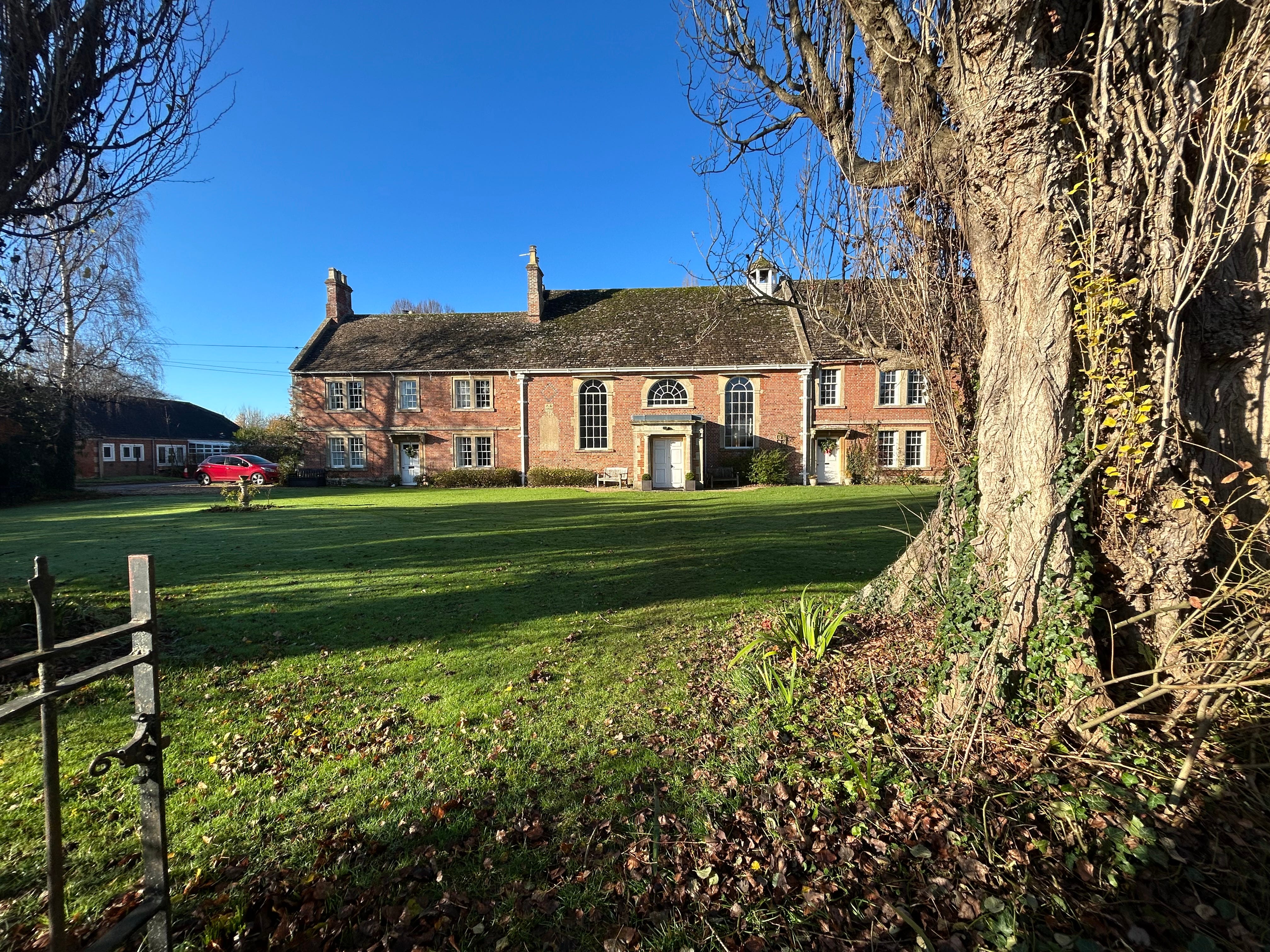
Separated by the garden was the sisters’ house, occupied entirely by females employed in work.
Through his work in the village, John Cennick became one of the founders of the Moravian Church in England. A new home for the single sisters was built in 1785-6, and in 1792-3, the former chapel and manse were rebuilt. The present buildings were built in 1792-4 and are of red brick with ashlar dressings and stone slate roofs. In all, he established over 40 Moravian churches by the time he died at the relatively young age of 36, July 4th 1755.
The cause of his death is stated as fever whilst he was in London. He left behind a wife and two children. John Cennick is buried at the Moravian cemetery (Sharon’s Garden) in Chelsea.
John wrote many hymns. John Julian, the editor of A Dictionary of Hymnology, wrote this about Cennick: “Some of the stanzas of his hymns are very fine, but the hymns taken as a whole are most unequal. Some excellent centos might be compiled from his various works.”
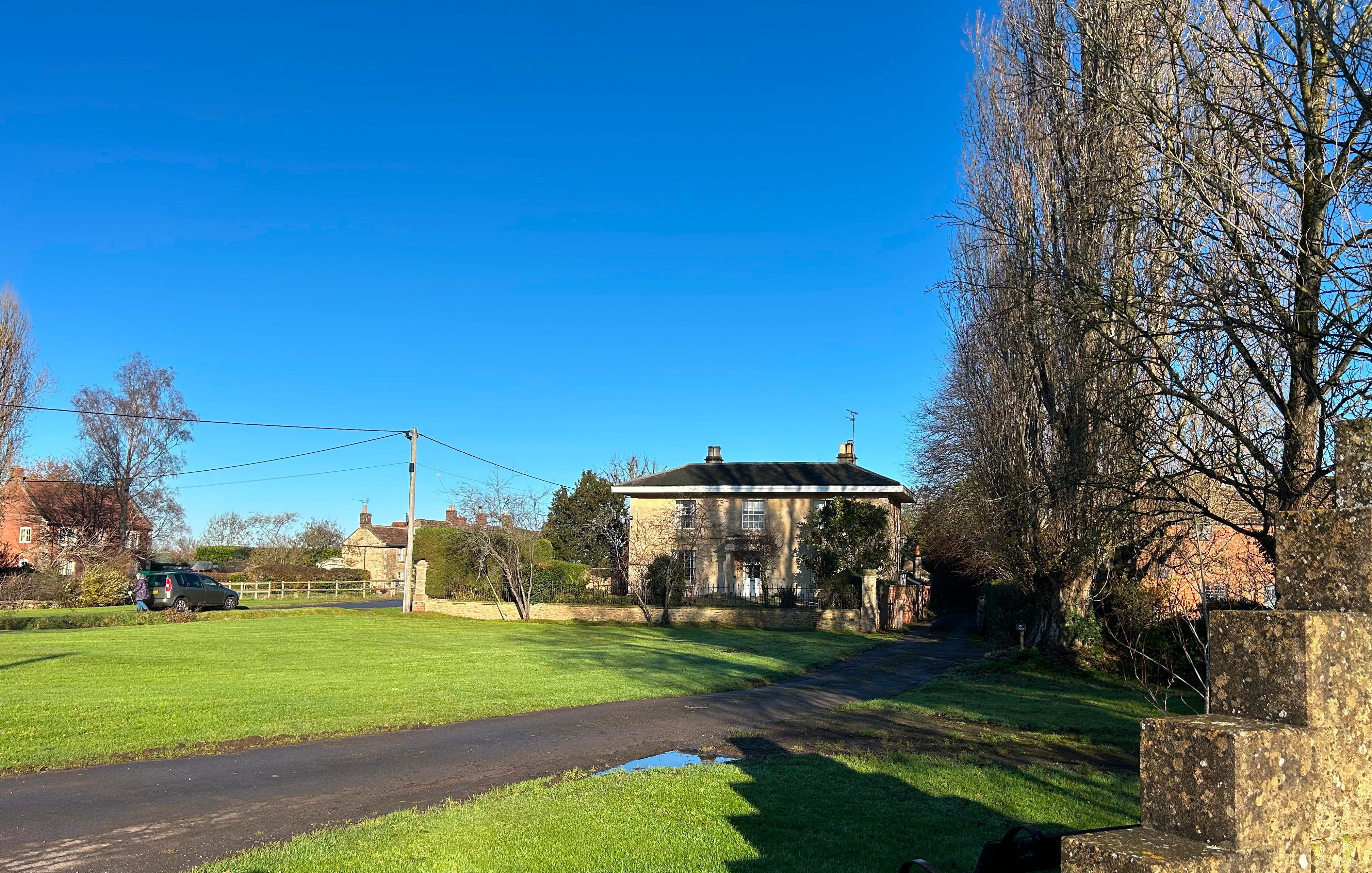
So, now you know why this tiny village of East Tytherton has a Moravian Church which looks over the village green. I hope you have found this story interesting; please feel free to look back on my archive of over 200 stories.
If you are not a subscriber yet, please click the button below so you will receive future stories by email, or if you download the Substack app, you will see them there.