

I recently took advantage of an offer from Dingbats, one of my favourite notebook manufacturers. The offer was a bundle, comprising of: a Dingbats Backpack (something I have been considering for a while), with an A5+ Earth Collection notebook and a pack of four Atopen fineliner pens.
I have previously reviewed a notebook from the Wildlife Collection1 and will review the new Earth Collection one later. It has a few differences. Once I have put the backpack through its paces, I will let you know what I think of it. It looks good, but the proof needs to be in the testing of it, not just the appearance.
Let’s get to the pens!
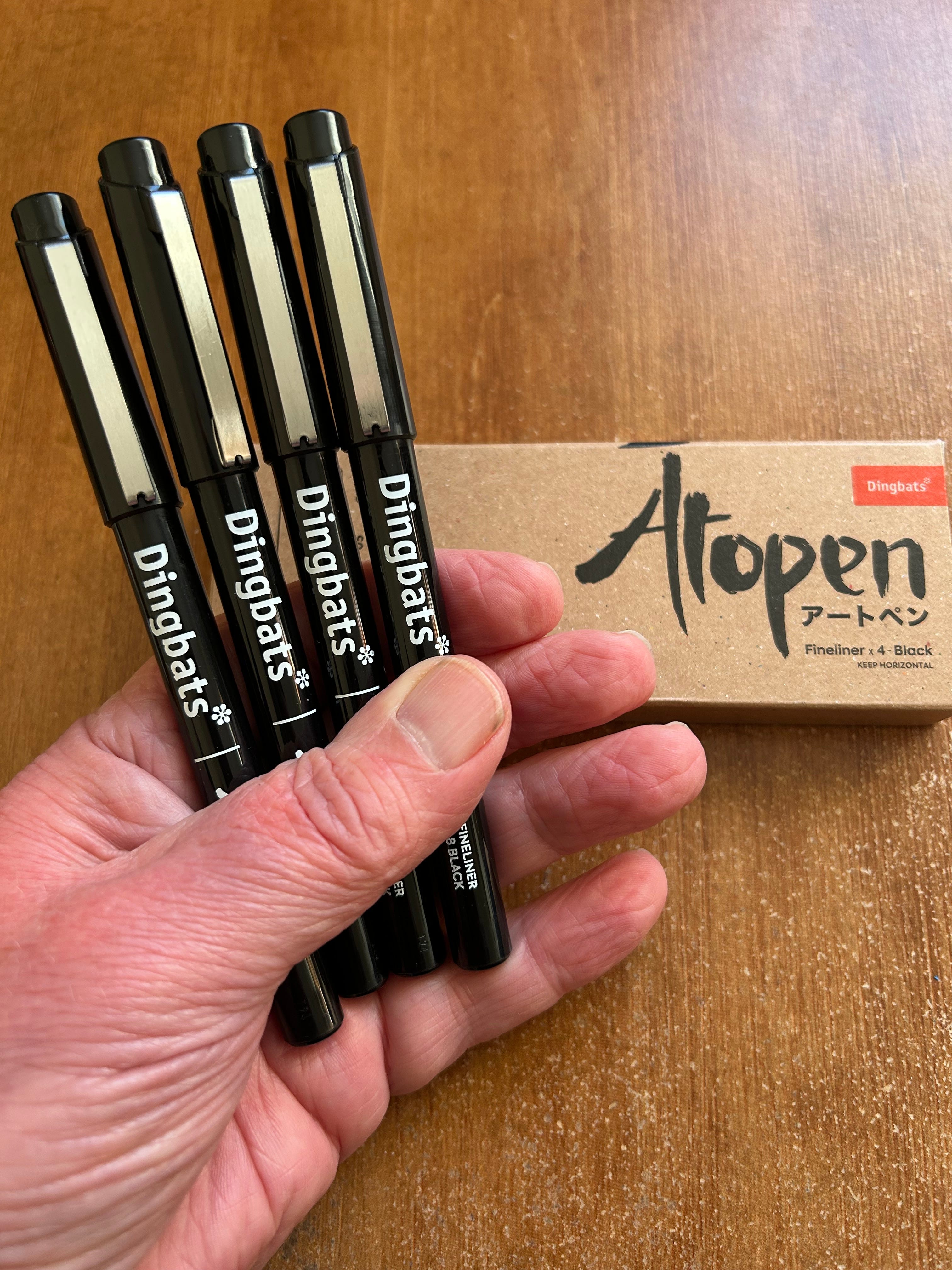
Dingbats Atopen Fineliner Pen
Please note that I am not affiliated in any way with Dingbats and that I paid for the pens just as any other customer would.
Regular readers will know that I like to use a fountain pen for most of my writing, although I am not averse to a good ballpoint, pencil, or testing out any other type of pen.
Purchased separately, a pack of four consisting of a 01, 03, 05, and 08 nib sizes is currently £13.95. They are manufactured in Japan, a country known for quality pens of this type.
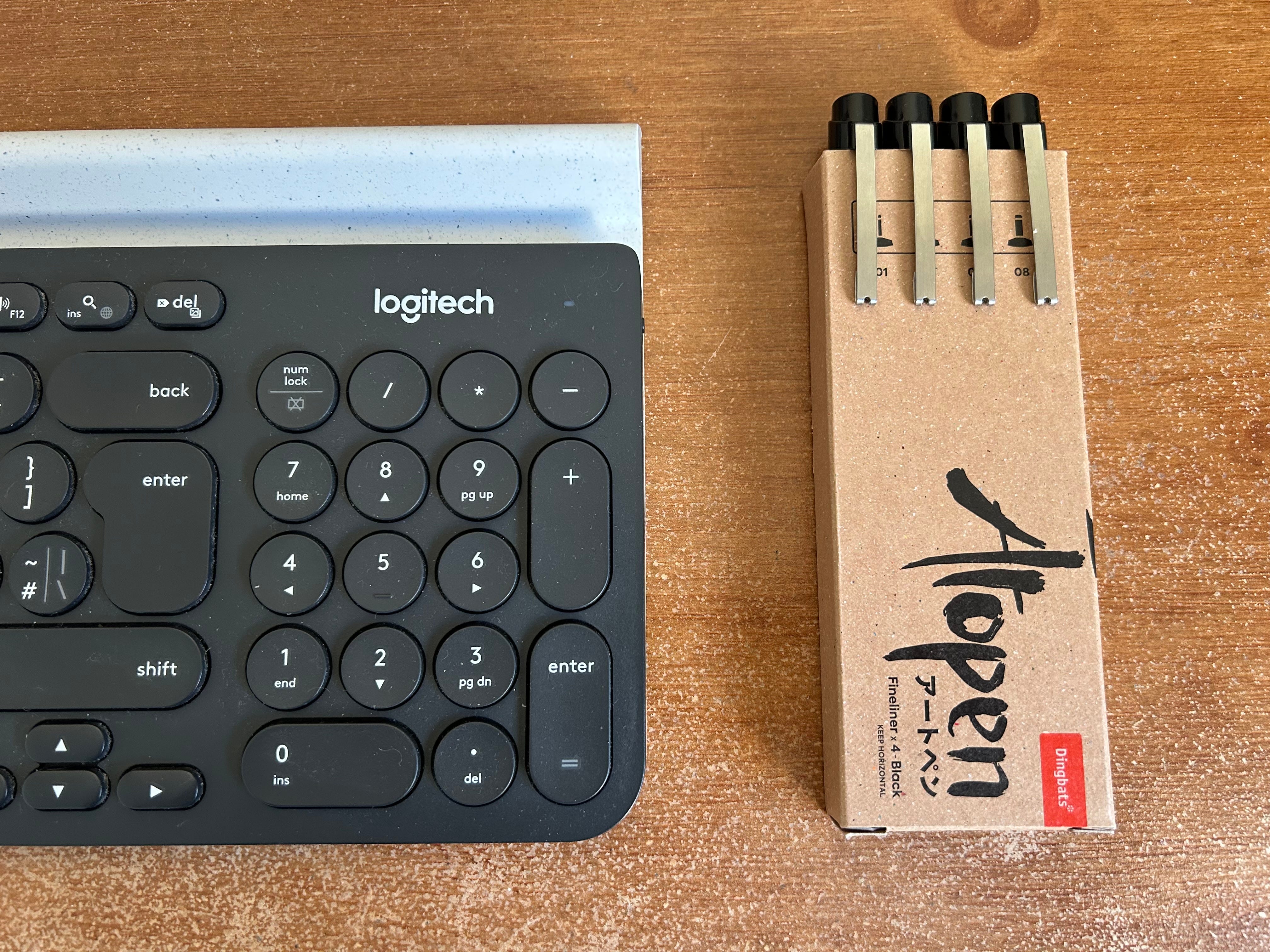
The pens are 13.8cm in length and 1cm wide, with approximately 2mm added for the cap. If you post the cap when you write, it takes the overall length to 16cm. The clip is well sprung and without any sharp points that could ruin the lining of a pocket, although the instructions on the packaging advise that they are stored horizontally.
The black ink is water-based, waterproof, lightfast, bleed, and smudge-proof. They are claimed to be of archival quality, making them ideal for writing notes or documents that you want to be read in many years’ time.
My test to check the fineness of the different sizes is shown in the photo below. I wrote on a page in my Dingbats A5+ Wildlife Collection Notebook that I use as my Bullet Journal. I have used the pens more than you just see in the video. The different widths are ideal to use for something like a Bullet Journal, where the larger widths can be used for headers or titles, and the narrowest to draw fine lines to separate sections in the journal.
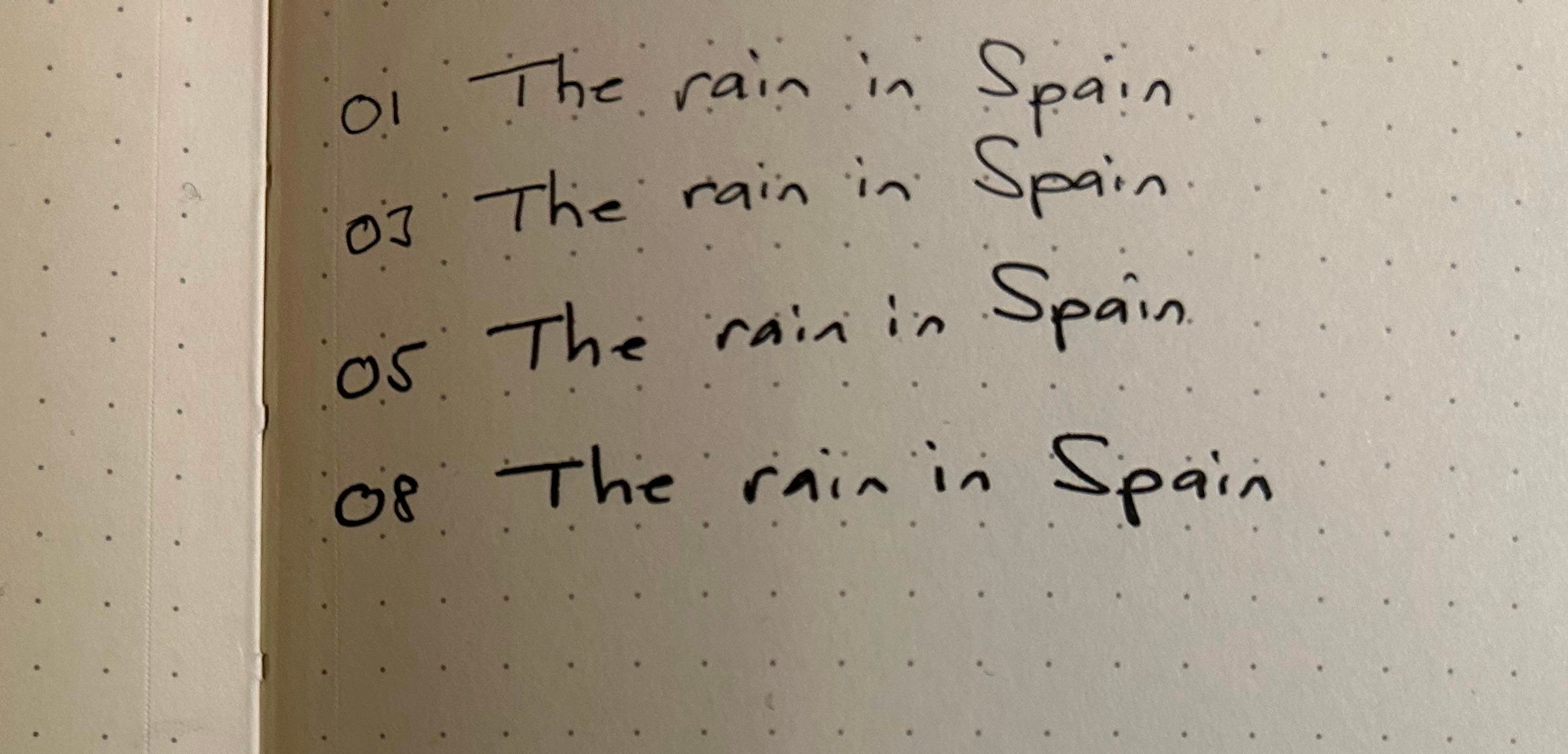
I have tried a smudge test and even the largest nib did not smudge except if rubbed immediately and at the last point the nib was lifted off the paper. A test of rubbing a couple of seconds after writing produced no smudging at all. All the pen widths do well in this test. The widest nib, of course, puts down more ink, and is most likely to smudge. It is good to see that the 08 did really well in this test. Drying time is definitely under two seconds. Quite amazing for a water-based pigment ink.
When my wet finger was passed over my writing, once again the ink met up to the bold claim that it is waterproof. My tests have proven to me that the ink is smudge, bleed, and waterproof. It would need more time to test that the ink is lightfast, as claimed, but I would have no hesitation in believing Dingbats’ claim that it is.
If you’re looking for a good fineliner pen, then I can certainly say that the Atopen from Dingbats lives up to its claims. They write well and are ideal for use when journaling and note-taking. I can imagine that if you like to write outside when there is a chance of your pages getting wet, these pens will be ideal. I am sure that one will accompany me when I am out researching and visiting places for Roland’s Travels.
Thank you for reading this story. If you haven’t subscribed yet, please use the subscribe button below. It’s always free to read all of my stories, with a paid option for anyone who wishes to help support what I do. Or you can use this Buy Me a Coffee link. Please feel free to leave a comment.